
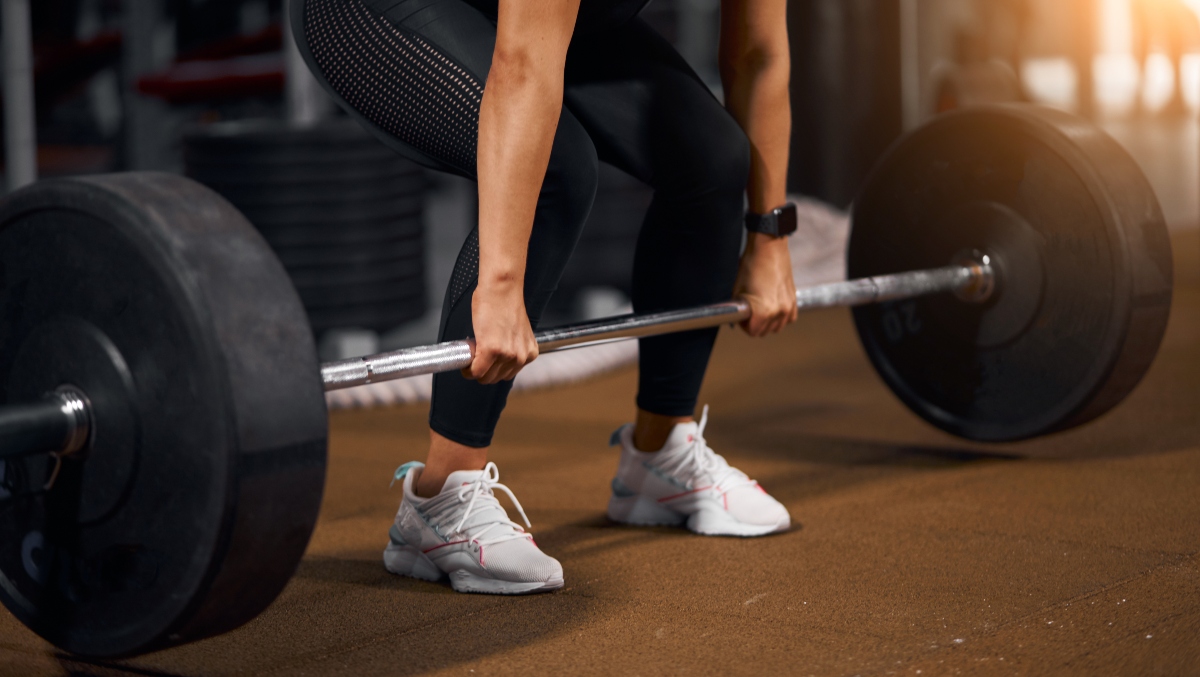
Deadlifting, also known as the deadlift, is a must-have in any training plan. This exercise engages nearly all major muscle groups, improves posture, and strengthens functional strength—from core to leg muscles. However, as effective as the exercise is, it is also highly demanding: precise technique is essential to avoid injuries and achieve optimal results. In our article, we’ll guide you through the correct technique, show you how to avoid common mistakes, and help you get the most out of your training.
What is deadlifiting?
The concept is straightforward: you lift a heavy, stationary weight (dead weight) off the ground (lift), stand upright, and then lower the weight back down in a controlled manner. Sounds simple, right? In reality, you’re training almost your entire body. The key muscle groups targeted include:
- Quadriceps and hamstrings,
- Gluteal muscles,
- Neck and shoulder muscles,
- Core muscles (back and abs),
- Hand and forearm muscles.
With this exercise, you gain more than just strength. Deadlifting not only helps you build muscle and increase strength but also improves your posture and stability. If you’re looking for a versatile and effective exercise, the deadlift is the perfect choice. However, as mentioned earlier, proper technique is crucial. That’s why we’re breaking down the correct execution for you step by step.
Step-by-step instructions for deadlifting
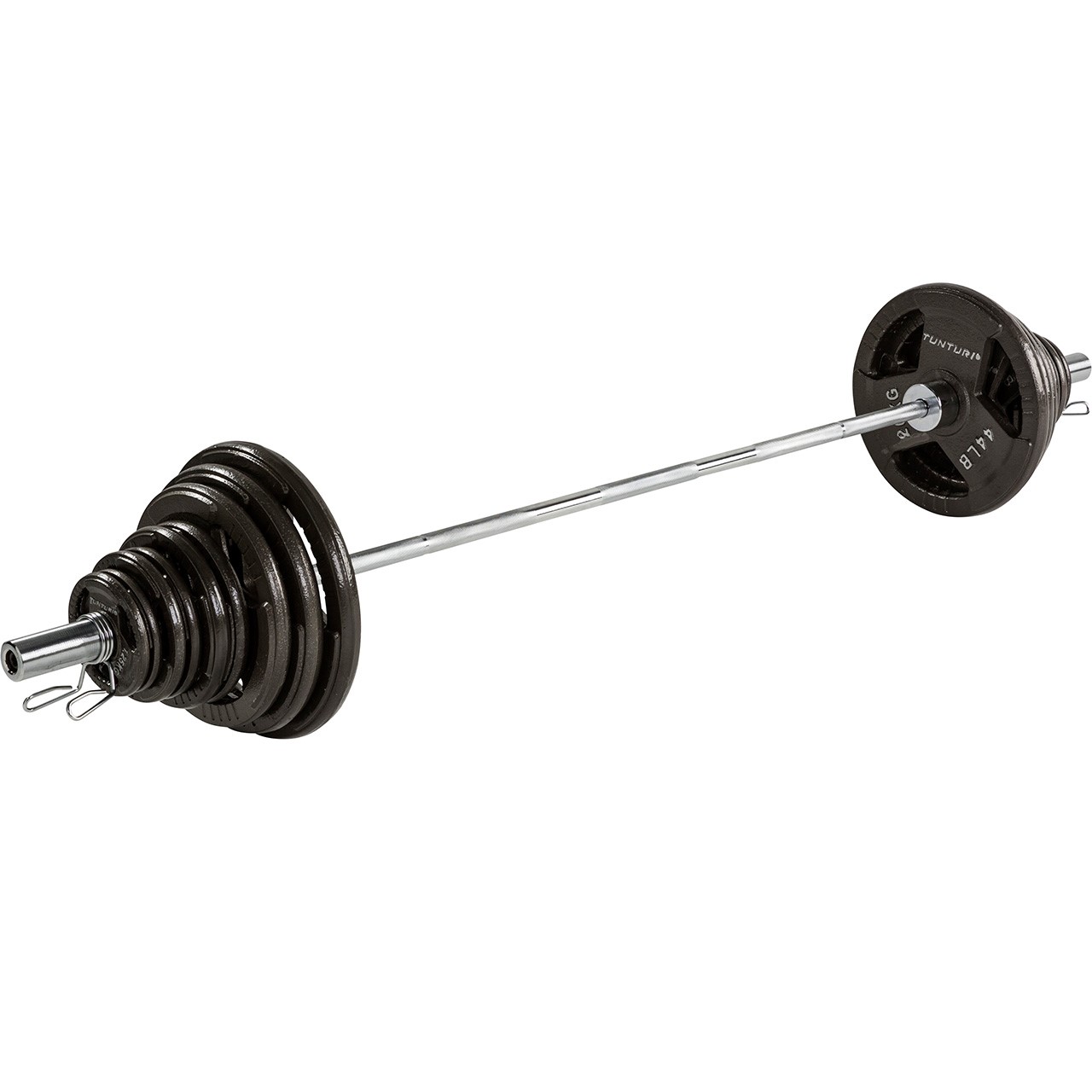
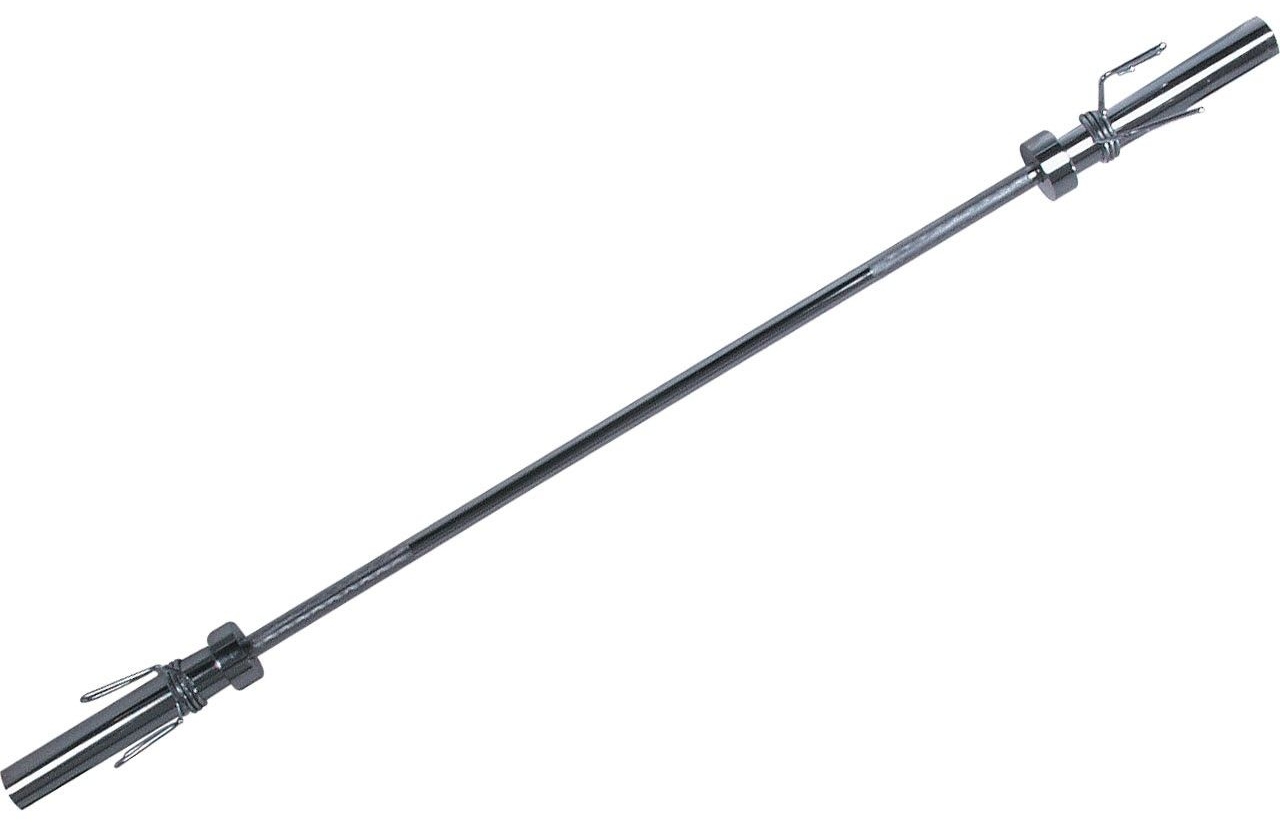
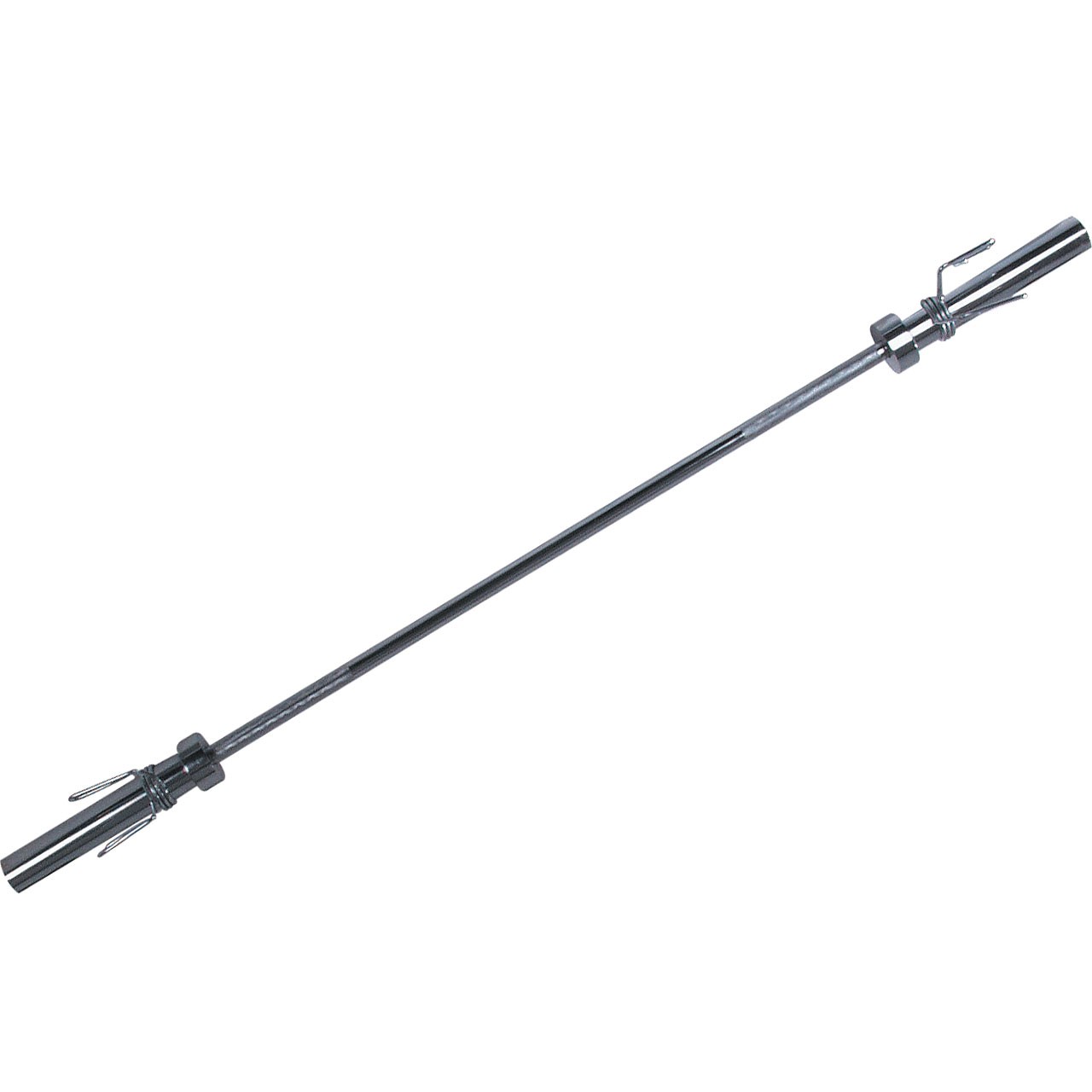
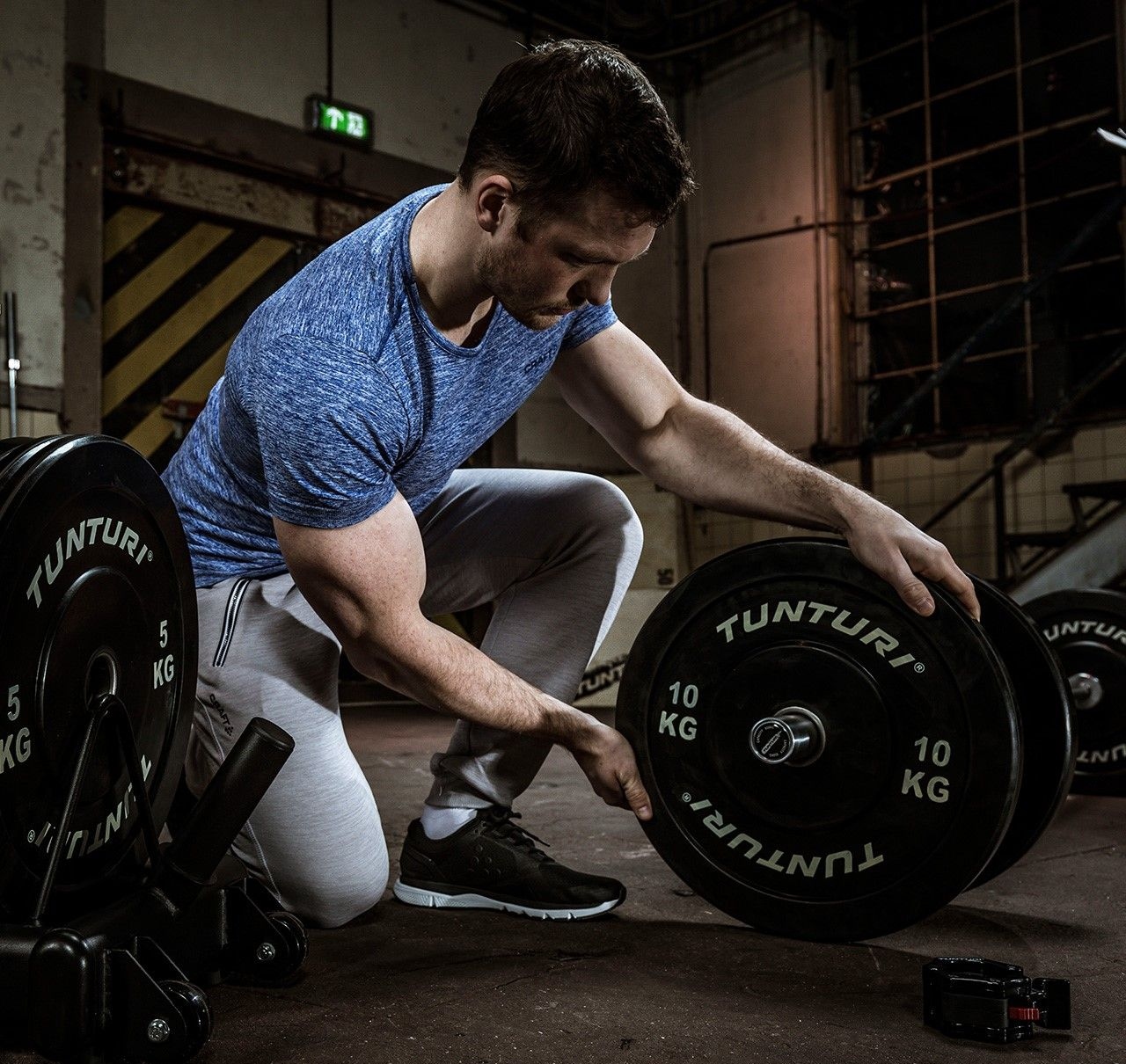
Before starting with deadlifts, it’s important to have the right equipment. Ideally, use an Olympic barbell (20 kilograms) and weight plates that ensure the barbell is at the correct height. Beginners can start with lighter weight plates to practice proper technique. The total weight should be challenging but not overwhelming. For men without prior experience, 40 to 60 kilograms is a good starting point, while women can begin with 30 to 40 kilograms. The key is to focus on precise execution as a beginner before increasing the load.
Der right position
The stance is the foundation of proper technique. Approach the barbell without rolling it. The bar should be positioned directly over the middle of your feet. Stand shoulder-width apart and slightly turn your feet outward to gain more stability. Ensure your weight is evenly distributed across your entire foot, allowing for a secure stance throughout the exercise.
The starting position
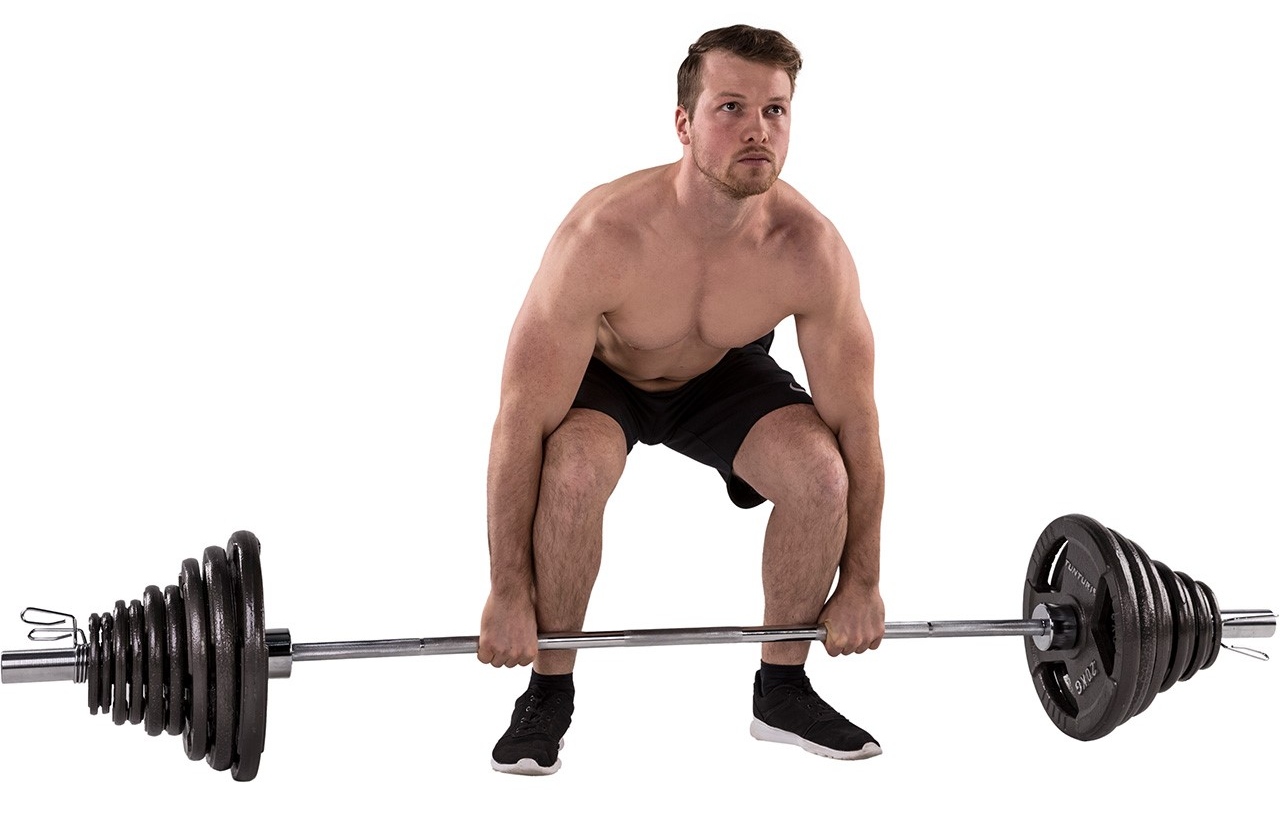
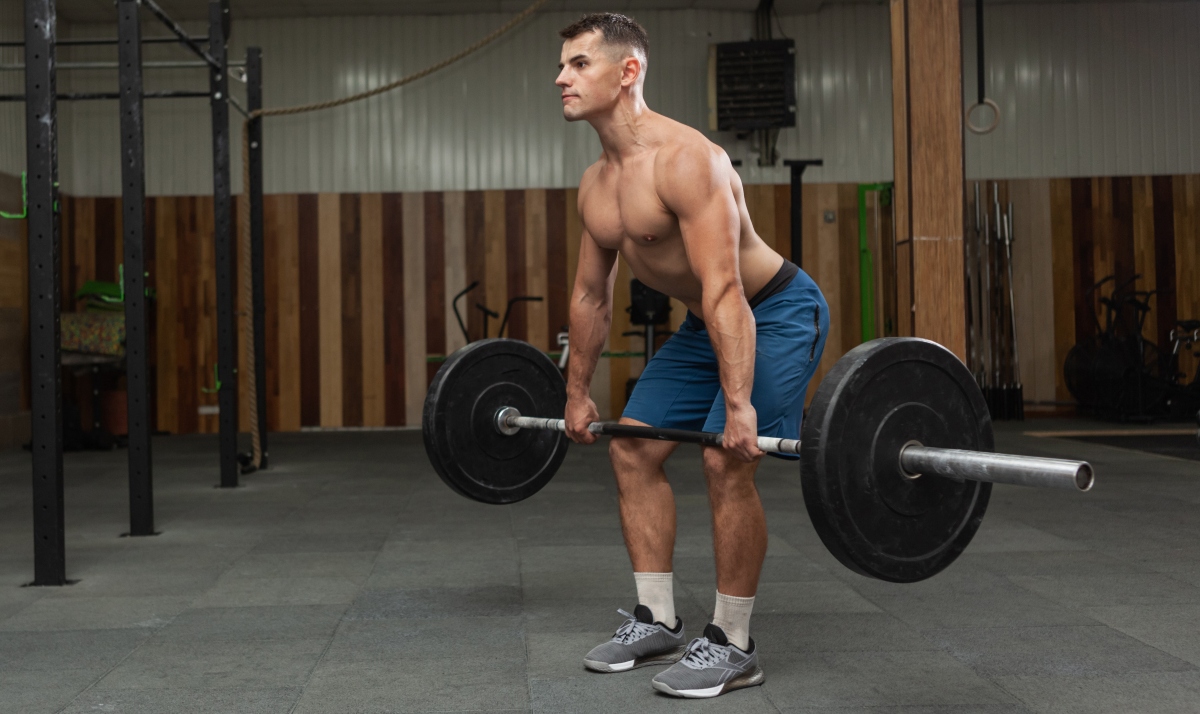
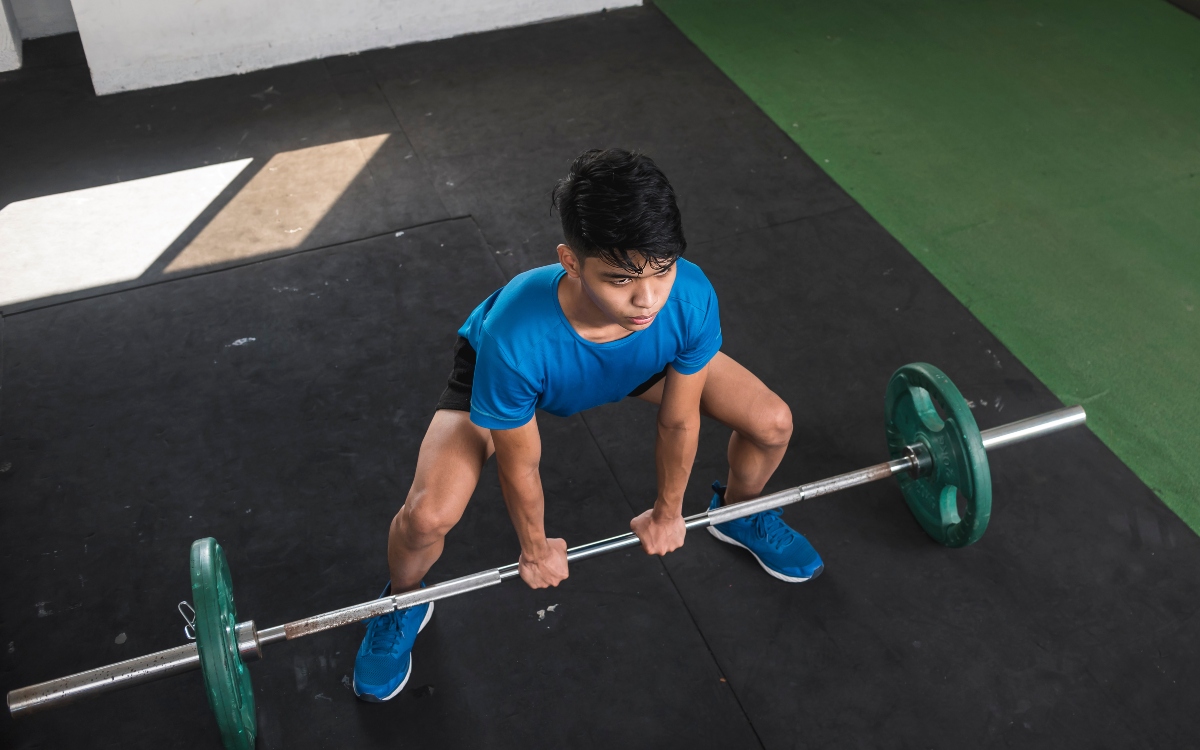
Slightly bend your knees so that your shins touch the barbell without going into a deep squat. Keep your back straight and your hips slightly pushed back. Grip the bar with an overhand grip, with both palms facing your body, and position your hands outside your knees. Pull your shoulders back and down, extend your chest forward, and look straight ahead to stabilize your cervical spine.

© photology1971 — stock.adobe.com
The upward movement
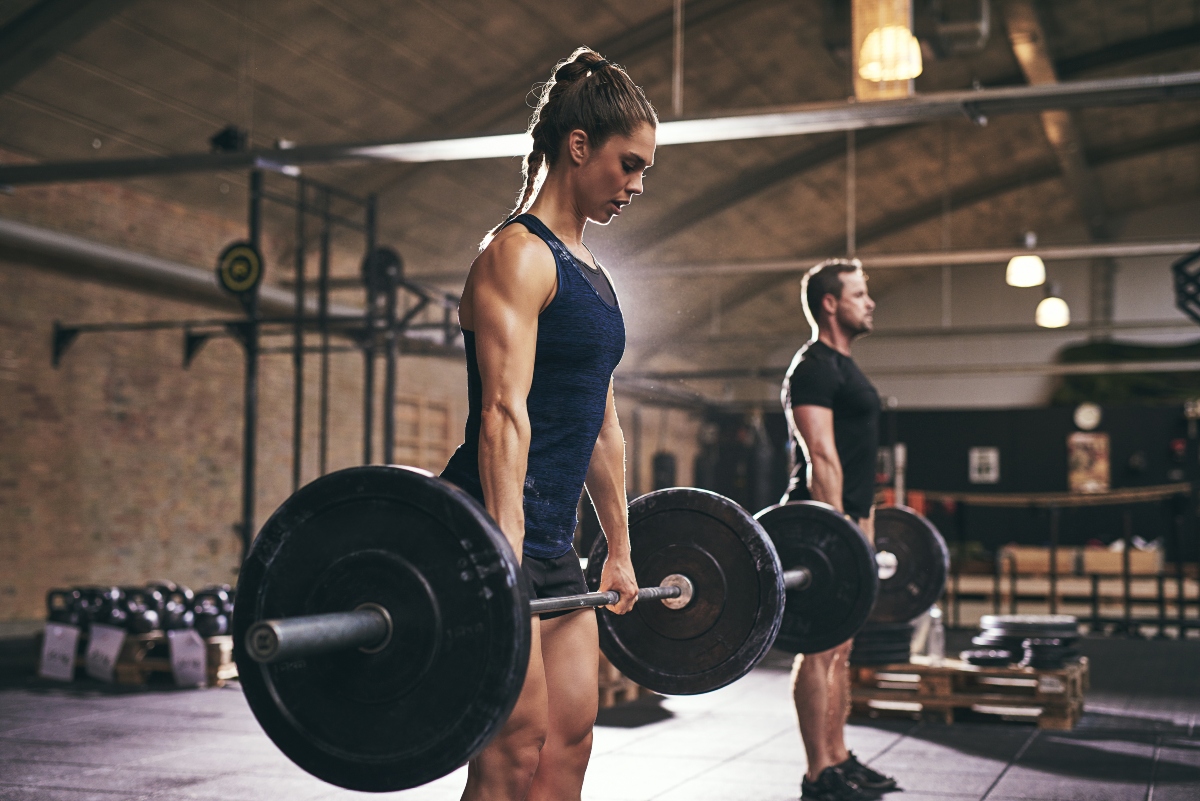
Engage your core muscles – particularly your abdomen and lower back – to stabilize your spine during the movement. Take a deep breath and begin the upward movement. Press your feet firmly into the floor and pull the bar tightly along your body as you lift it. Keep your back straight at all times, and fully extend your arms. Once you have fully extended your hips and are standing upright, the first part of the movement is complete. Pay special attention to: Avoid arching your lower back or overextending backward at the top of the movement. Keep your core stable and maintain tension throughout your body.
© Flamingo Images — stock.adobe.com
Controlled weaning
Push your hips back and lower your shoulders to carefully lower the barbell. Let the bar glide closely along your body while keeping your back straight. Tension in your core should be maintained throughout the entire movement. Lower the bar completely to the ground and rebuild the tension for each repetition.
© splitov27 — stock.adobe.com
Correct Deadlift: How to Avoid Mistakes and Injuries
To avoid putting too much strain on your intervertebral discs, ensure that your back remains neutral throughout the exercise. A neutral back means maintaining the natural curve of the spine – with its slight arch – without rounding or overextending. Activate your abdominal and back muscles, keep your gaze forward, and slightly extend your chest forward to ensure a stable posture. The hips should be controlled forward during the upward movement without overextending the back. Another crucial point is the contact between the bar and your body. The bar should stay close to your body throughout the entire movement to minimize strain on the lower back. Light pressure on the shins is normal but should not cause pain. Also, avoid leaning backward in the final position, as this unnecessarily stresses the spine.
Deadlift – One Exercise, Many Variations
In addition to the classic version, there are various variations such as the Sumo Deadlift, Romanian Deadlift, or Deficit Deadlift. These allow you to target different muscle groups or adjust the technique to meet your individual needs. The choice of the right variation depends entirely on your goals. Do you want to emphasize certain muscles, address technical weaknesses, or enhance your overall performance? Each variation has its benefits and can be flexibly integrated into your training plan. Below, we’ll introduce the key exercise variations and their specific use cases.
Sumo-Deadlift
With a wide stance and externally rotated feet, the Sumo Deadlift reduces the range of motion and shifts the load more onto the leg muscles. The lower back is less stressed, making this variation ideal for individuals who want to train with a focus on protecting the hips or lower back. The altered leverage also allows for lifting heavier weights.
© Mdv Edwards — stock.adobe.com
Stiff Leg Deadlift
In the Stiff Leg Deadlift, the legs remain almost straight, and the hips take on most of the work. This variation primarily targets the lower back, with less strain on the leg muscles. It requires very precise technique to avoid unnecessary stress on the spine.
Romanian Deadlift
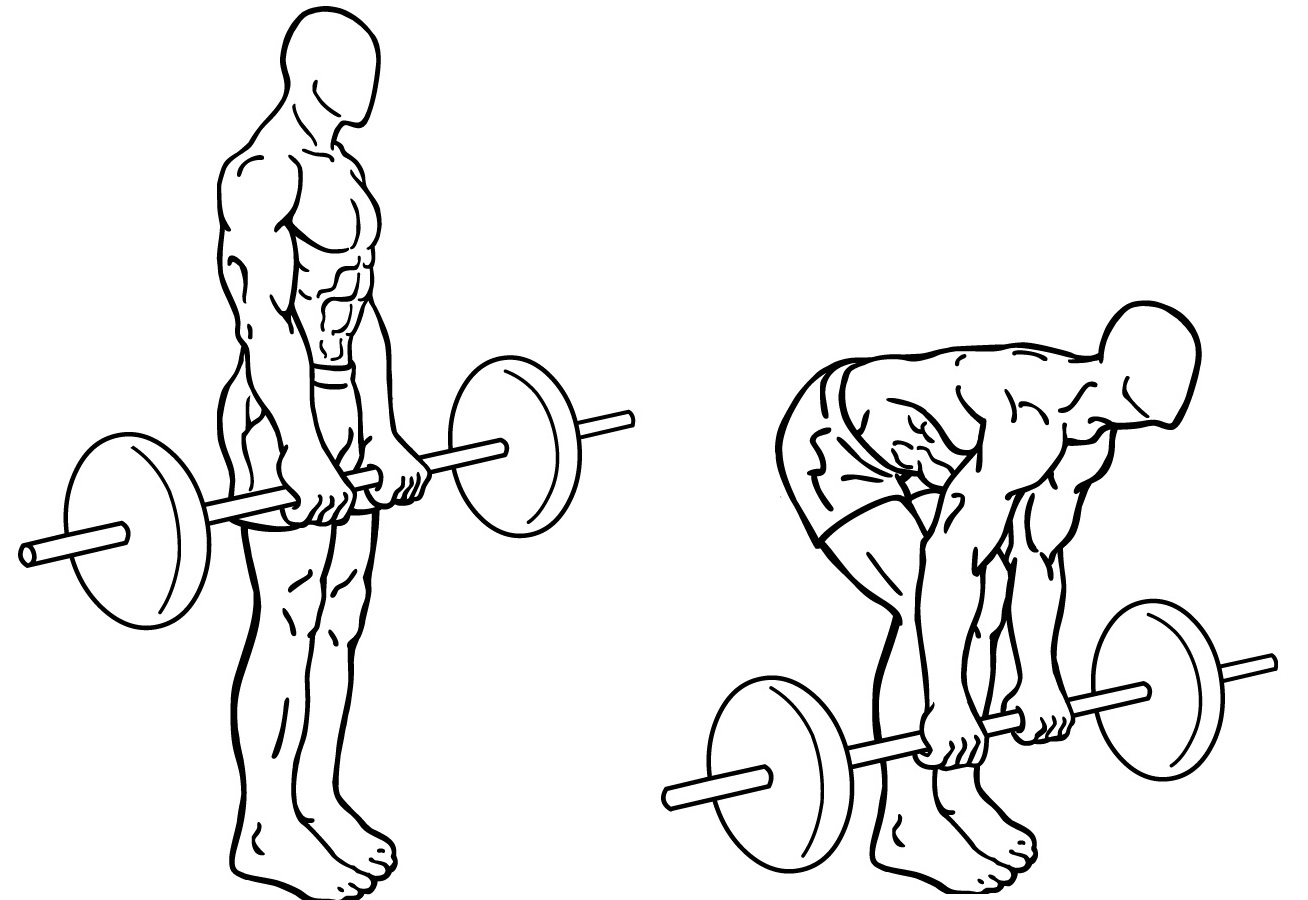
This variation focuses on hip extension and the upper body. The knees remain slightly bent, and the movement mainly comes from the hips. As a result, the hamstrings and lower back are intensely engaged, while the quadriceps are less stressed. The Romanian Deadlift is particularly effective for strengthening the posterior chain and improving hip mobility.
Von Everkinetic — http://everkinetic.com/, CC BY-SA 3.0, https://commons.wikimedia.org/w/index.php?curid=11976337
Deficit Deadlift
In this variation, you start from an elevated position, such as standing on a platform. This increases the range of motion and places greater demands on the muscles. The Deficit Deadlift is excellent for improving strength and explosiveness from the starting position.
Guide: Deadlift Execution Without a Barbell
The classic barbell is the best choice for learning the deadlift technique correctly and ensuring maximum stability. If it’s not available, there are alternatives that allow for similar movement patterns. These include:
Dumbbells
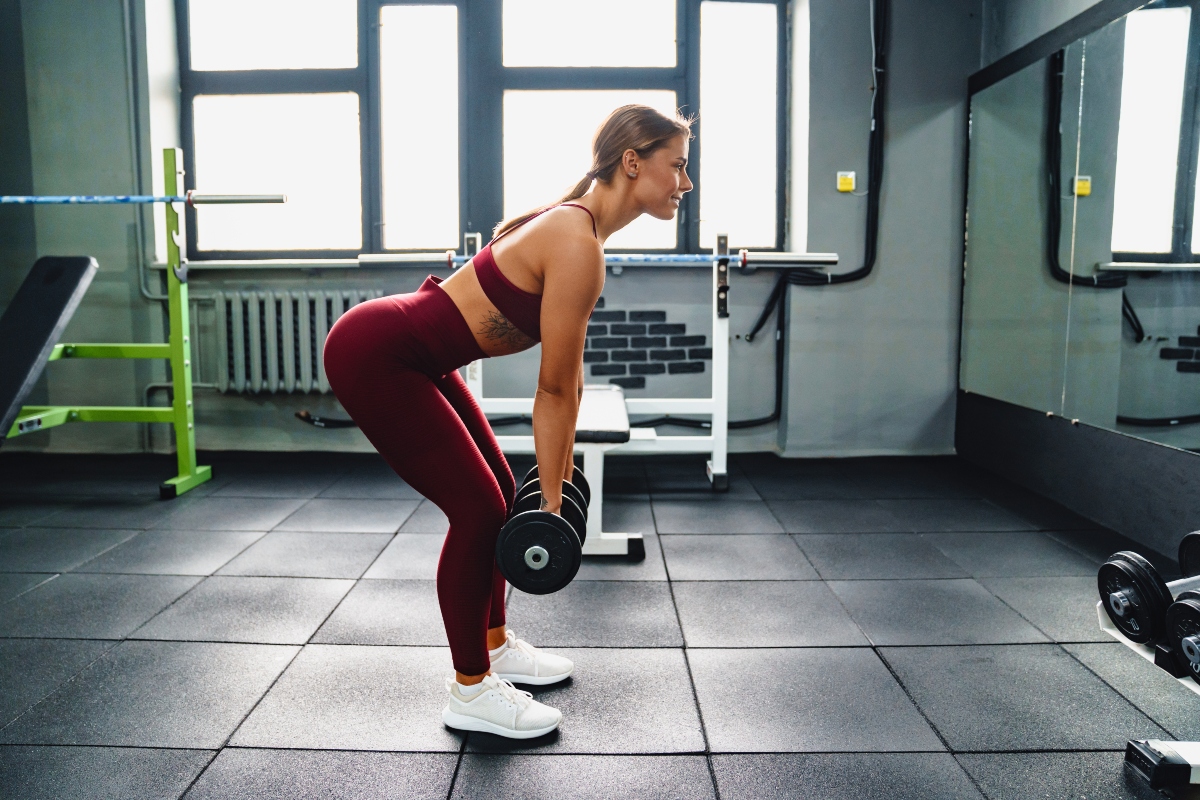
Place two dumbbells in front of you and grip them with an overhand grip. Perform the movement as described in the classic instructions, keeping the dumbbells close to your body. This variation targets the same muscle groups but is less stabilizing since the weights are separate.
© Drobot Dean — stock.adobe.com
Kettlebells
Use one or two kettlebells. In the so-called “Suitcase Deadlift,” hold the kettlebells at your sides and perform the movement as usual. This variation is especially good for beginners, as it is easier to maintain balance. However, the exercise can also be performed in a manner similar to the classic deadlift.
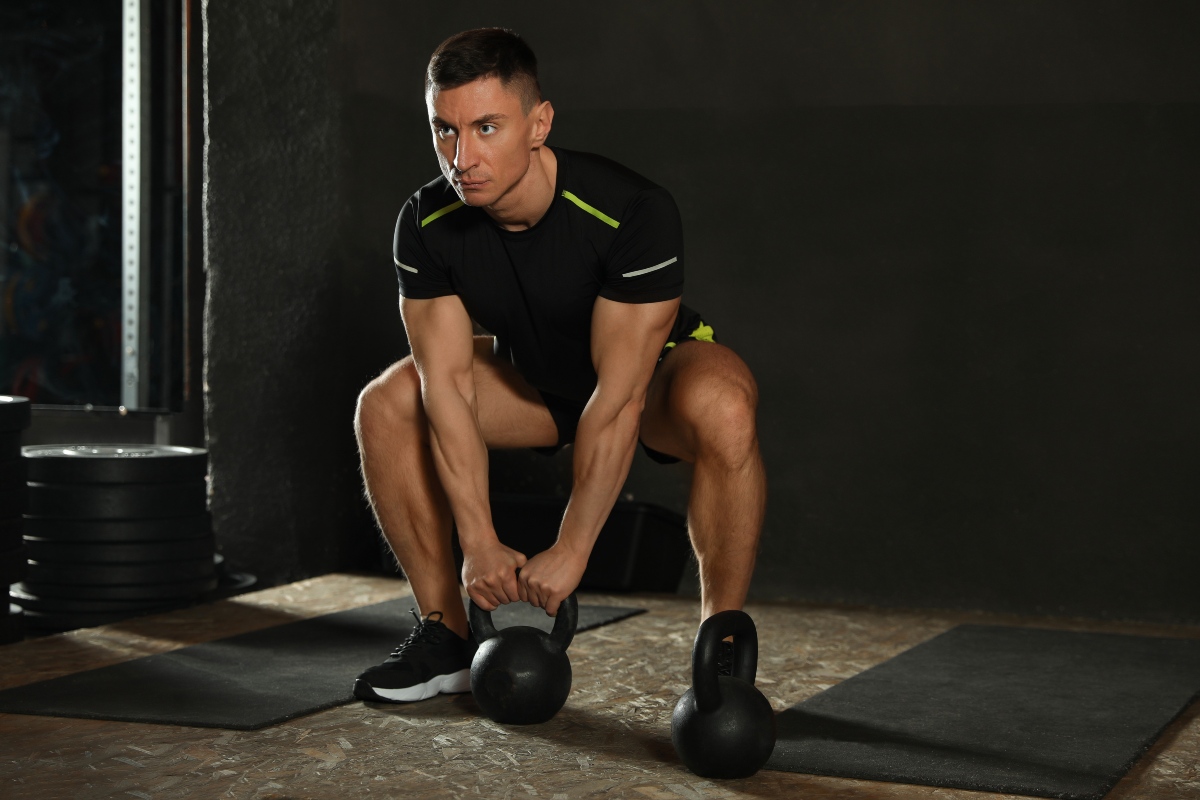
© New Africa — stock.adobe.com
Trap bar
The trap bar, a hexagonal barbell frame, allows for a more ergonomic grip position. You stand inside the trap bar and lift the weight using handles at the sides of your body. Many find this variation more comfortable, as it reduces strain on the back and places more focus on the leg muscles. However, it is recommended to learn the technique with the classic barbell before switching to the trap bar.
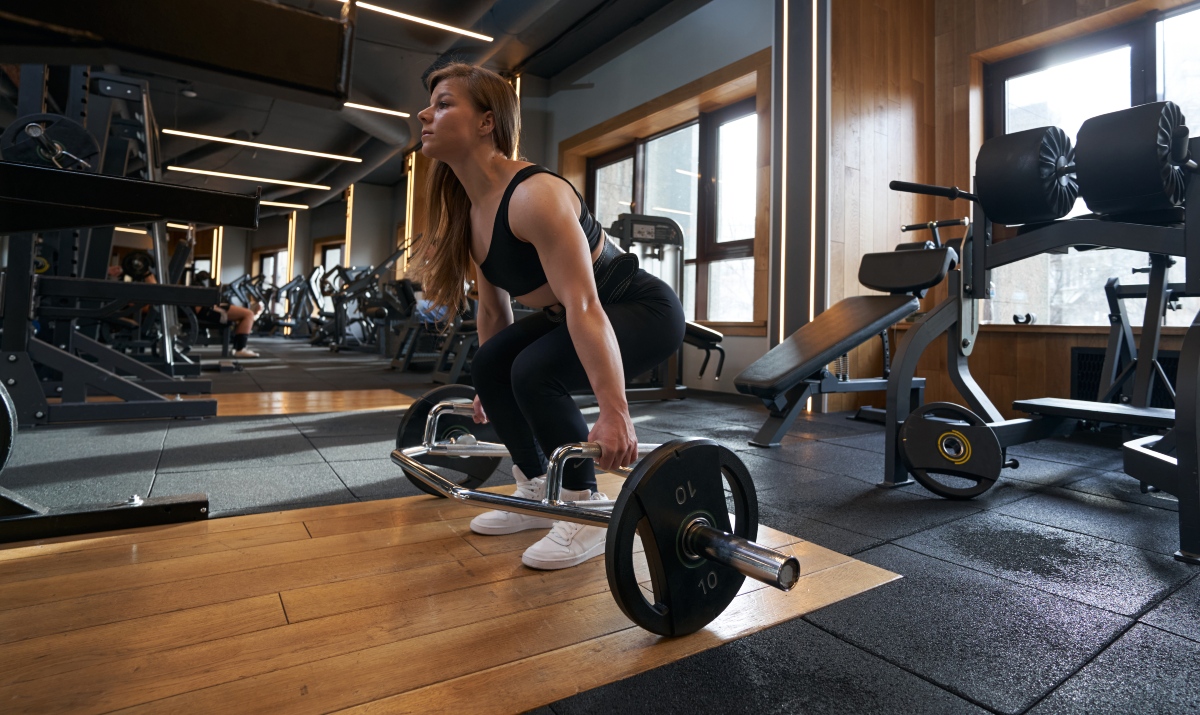
© Viacheslav Yakobchuk — stock.adobe.com
How to Integrate Deadlift into Your Training
When performing deadlifts, you should not train to failure, as this can be counterproductive for muscle growth and increases the risk of injury. Proper load and clean technique should take priority. If you want to work on your maximum strength, it is recommended to perform one to five repetitions at 80 to 100 percent of your 1RM (one-rep max). For muscle growth, six to twelve repetitions at 60 to 80 percent of your 1RM are ideal. Start by incorporating deadlifts once a week, and later increase the frequency to two sessions to enhance the training effect. Choose the weight and number of repetitions so that at the end of each set, you could still theoretically complete one to three more clean reps. If you notice that your posture suffers or your technique becomes sloppy, either reduce the weight or the number of repetitions. Progress can only be made with proper execution – safety and precision are key.