
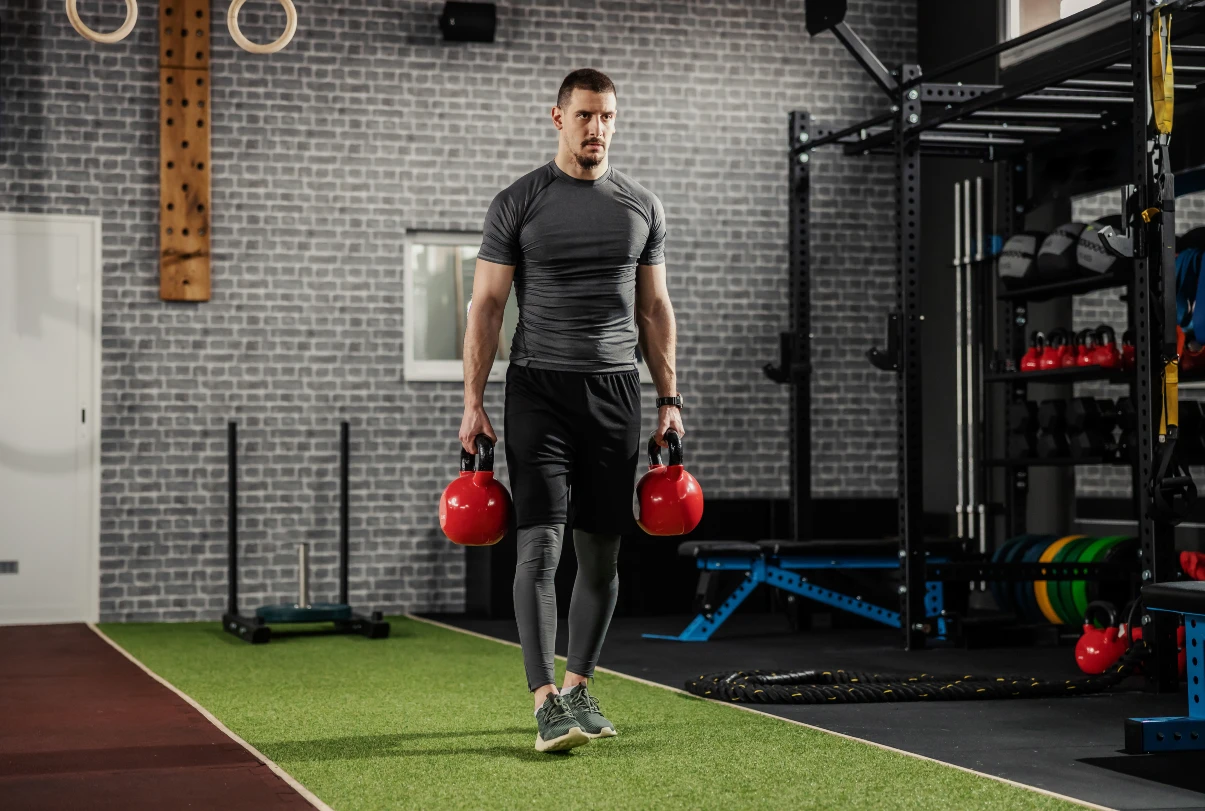
Pick up the weight, stand tall – and off you go! The Farmers Walk sounds simple, but it is one of the most challenging exercises in hybrid training. It simultaneously develops grip strength, core stability, and leg power. In this Farmer’s Carry guide, we explain which muscle groups are truly working, how much weight makes sense, and what matters most when performing the exercise correctly.
What Is a Farmers Walk?
The principle is remarkably simple. A heavy weight is held in each hand, usually a dumbbell or a kettlebell. The arms hang naturally at the sides, while the torso remains upright. Then you simply start walking. Take controlled steps while looking straight ahead, covering a predetermined distance or time.
The Farmers Walk combines strength and endurance training in a single exercise. While the forearms, shoulders, back, core, and legs work against the load, your heart rate rises rapidly and your cardiovascular system is pushed into high gear. Grip strength, core stability, and lower-body strength are trained simultaneously, providing a conditioning stimulus that traditional weight-training exercises cannot match.
Which Muscles Does the Farmers Walk Train?
This popular strength-endurance exercise is a highly effective full-body workout that targets multiple muscle groups simultaneously:
- Forearms and Hands: The grip muscles work at maximum capacity throughout the entire exercise, making it extremely demanding for the forearms.
- Core: The core stabilises the spine with every step under asymmetrical loading. The abdominals, obliques, and lower back remain constantly engaged.
- Shoulders and Upper Back: The trapezius, neck muscles, and rhomboids (the diamond-shaped muscles between the shoulder blades) keep the shoulder blades in position and prevent the weight from pulling the upper body downward.
- Legs and Glutes: The quadriceps, hamstrings, calves, and glute muscles support the total load and ensure a controlled walking rhythm.
What Are the Benefits of the Farmers Walk?
The exercise delivers benefits on multiple levels. One of the most significant is the tremendous increase in grip strength. This becomes noticeable not only during deadlifts and pull-ups but also in everyday tasks such as carrying shopping bags, moving boxes, or lifting children. Another major advantage is the stabilisation of the core under real-world loading conditions – something isolated abdominal exercises simply cannot replicate.
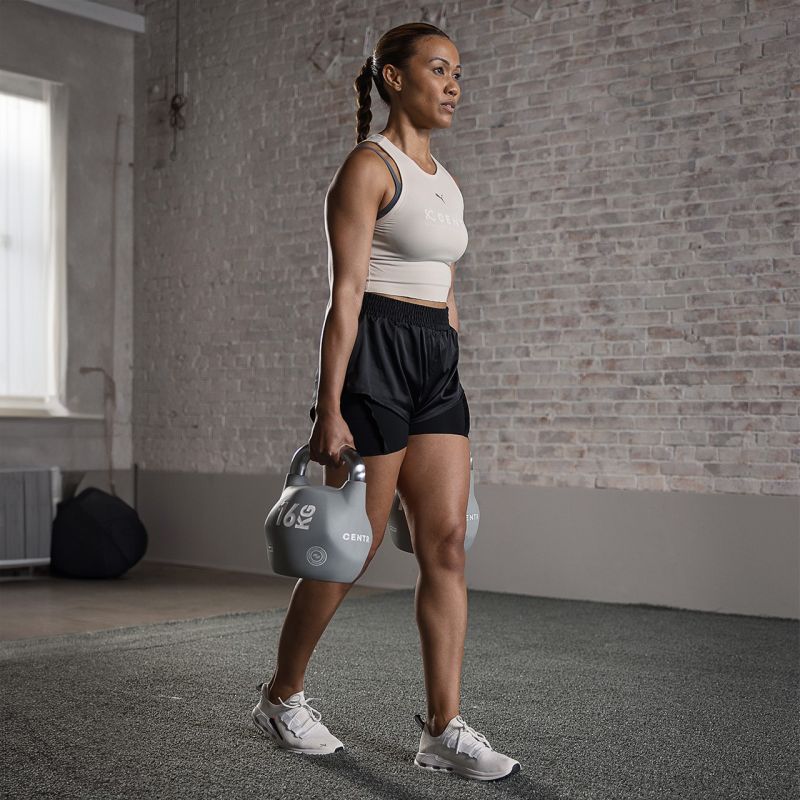

Carrying heavy loads over longer distances pushes not only the muscles to their limits but also significantly elevates the heart rate. The Farmers Walk combines strength and conditioning training into a single movement, making it particularly attractive when training time is limited.
Its effect on energy expenditure should not be underestimated either. Anyone looking to lose weight through strength training can benefit greatly from the Farmer’s Carry. The combination of heavy loads and endurance work burns a considerable number of calories.
Farmers Walk: Proper Technique
At first glance, the technique appears simple and unspectacular. However, you should not underestimate this exercise. Here’s how to perform the Farmers Walk correctly:
- Position the weights beside your feet.
- Squat down as you would for a deadlift, keeping your back straight and chest up.
- Grip the handles firmly and stand up using the power of your legs.
- Actively pull your shoulders back and brace your core.
- Walk forward using short, controlled steps while looking straight ahead.
- After reaching the desired distance, place the weights back on the floor in a controlled manner.
How Much Weight Should You Use for the Farmers Walk?
A good rule of thumb is to use a load equivalent to roughly 25–50% of your body weight. Beginners should choose a weight they can carry for the intended distance without their shoulders drooping or their posture collapsing. As experience increases, the load can gradually be increased. In true Beast Mode, athletes carry their own body weight.
Which Fitness Equipment Is Best for the Workout?
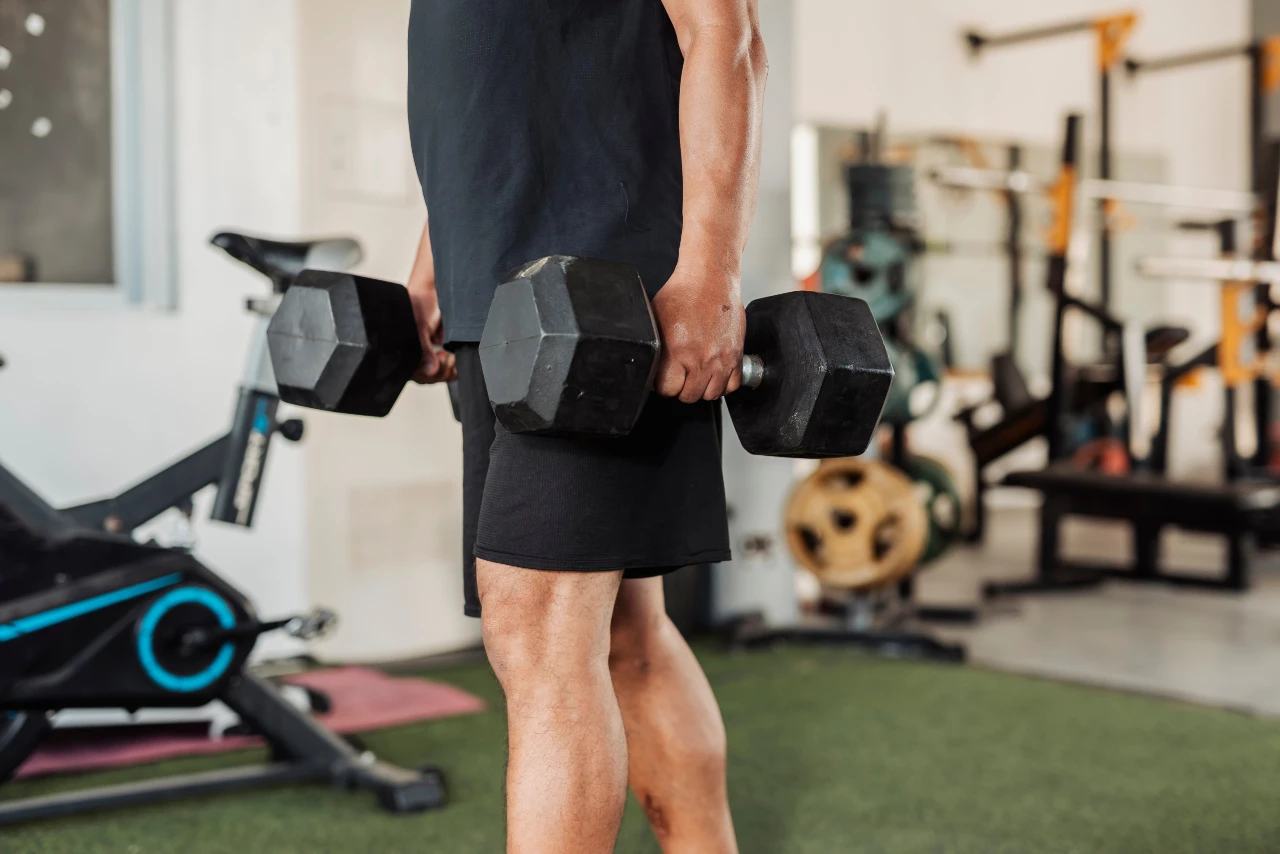
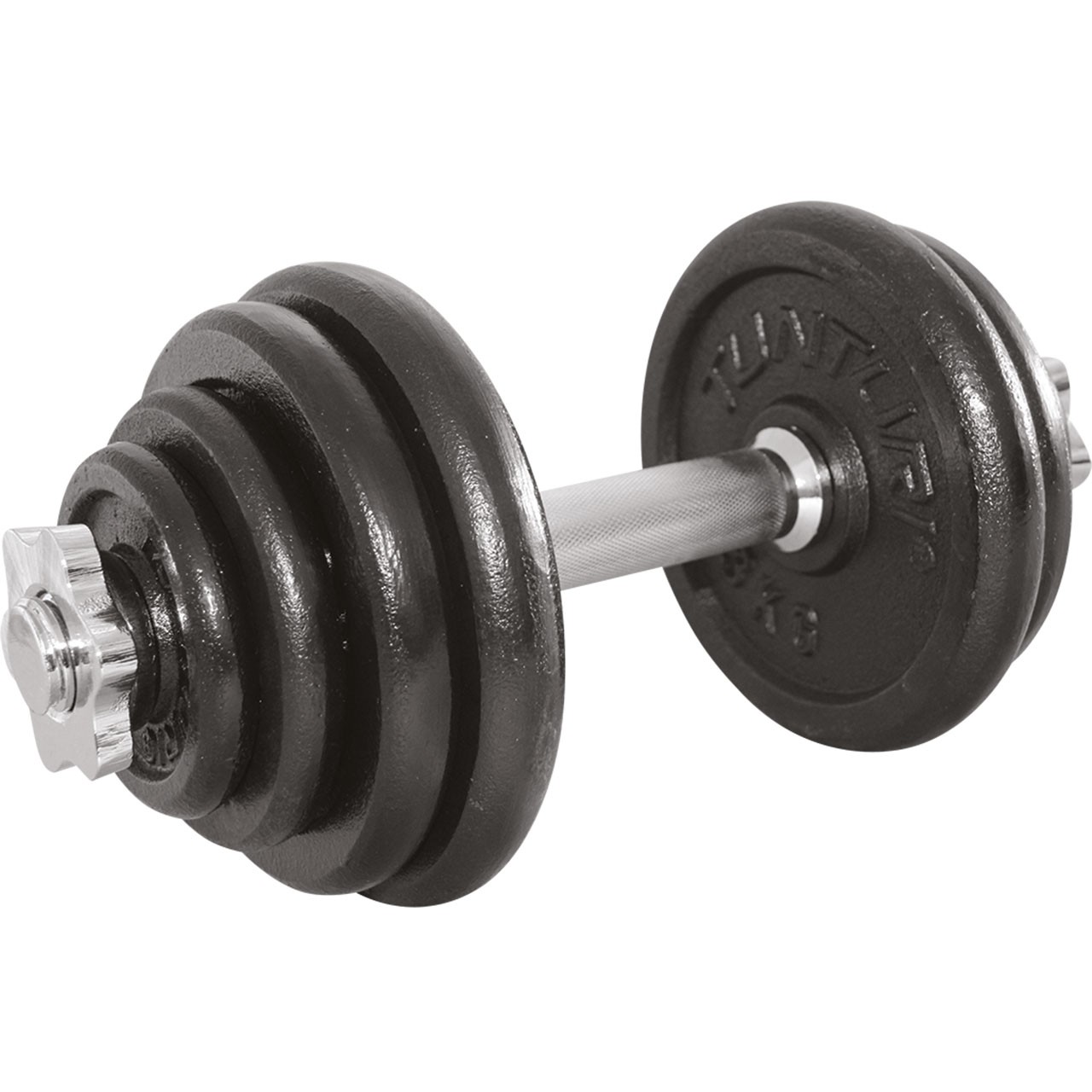
Virtually any training tool that can be gripped securely and carried in both hands is suitable for this powerful exercise. Whether in a home gym or a commercial fitness centre, there are several popular options, each offering unique advantages.
- Dumbbells: The simplest and most commonly used option. Hexagonal models are particularly practical because they do not roll away on the floor and are easy to grip when picking them up.
- Kettlebells: Due to their shape, they swing slightly while walking, placing additional demands on shoulder and core stability. An excellent choice if you also want to target the deep stabilising muscles.
- Farmer’s Walk Handles: The original Strongman version. Their lower position relative to the ground allows for the heaviest loads, and their thick handles make them ideal for dedicated grip-strength training.
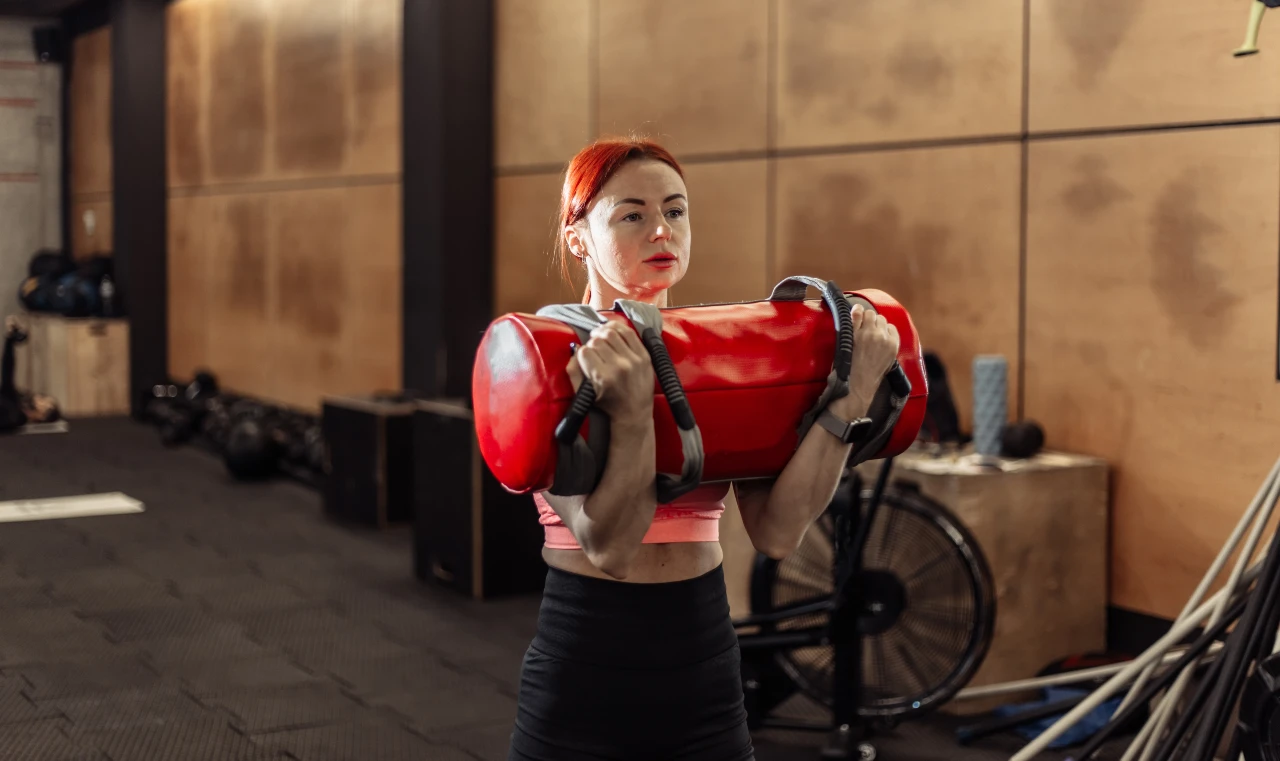
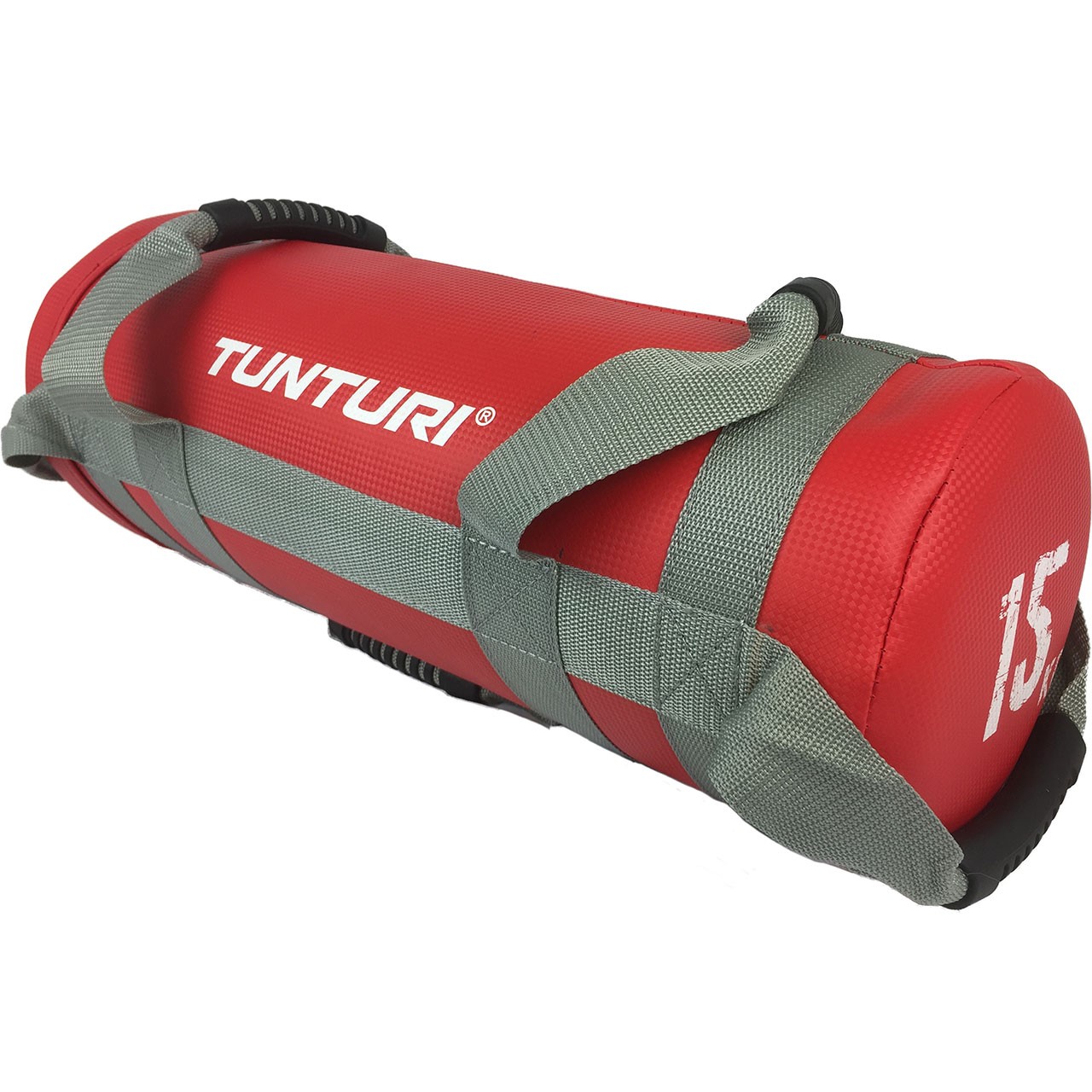
- Power Bags are ideal for athletic-style workouts where the load shifts slightly while being carried. They are also excellent preparation for the Hyrox Sandbag Lunges event.
- Weight Plates: Weight plates with integrated grip handles are a great alternative to kettlebells or dumbbells.
- Farmer’s Walk Handles (specialised carrying handles)
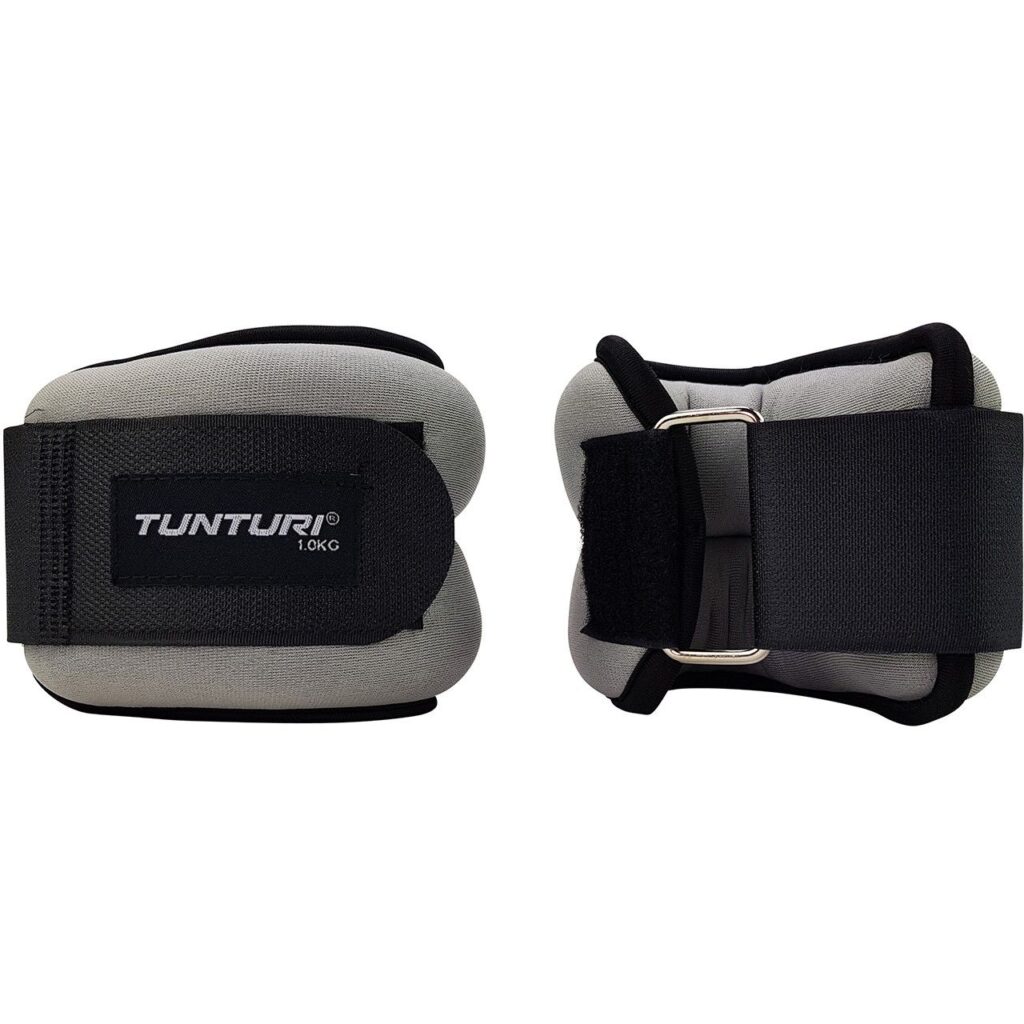
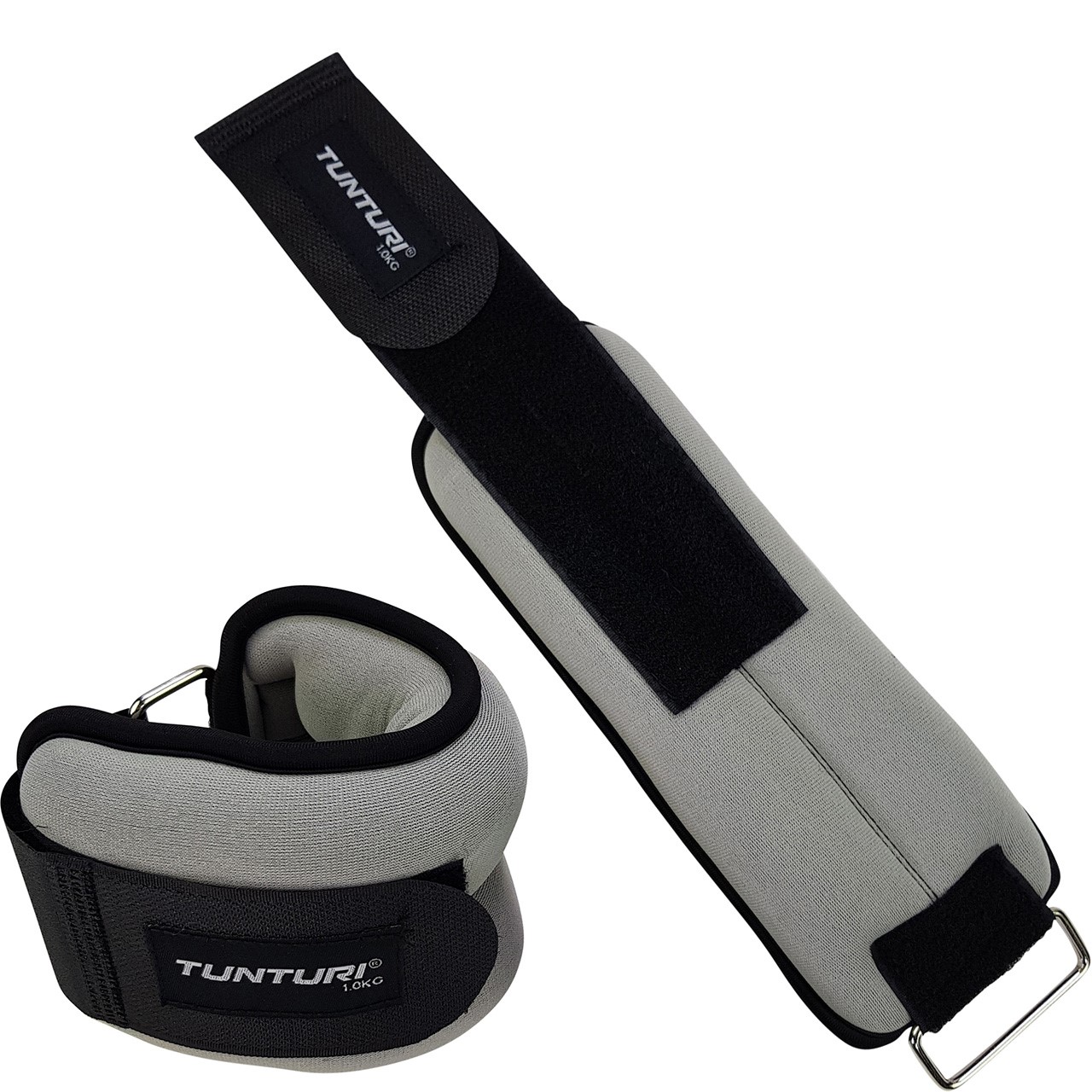
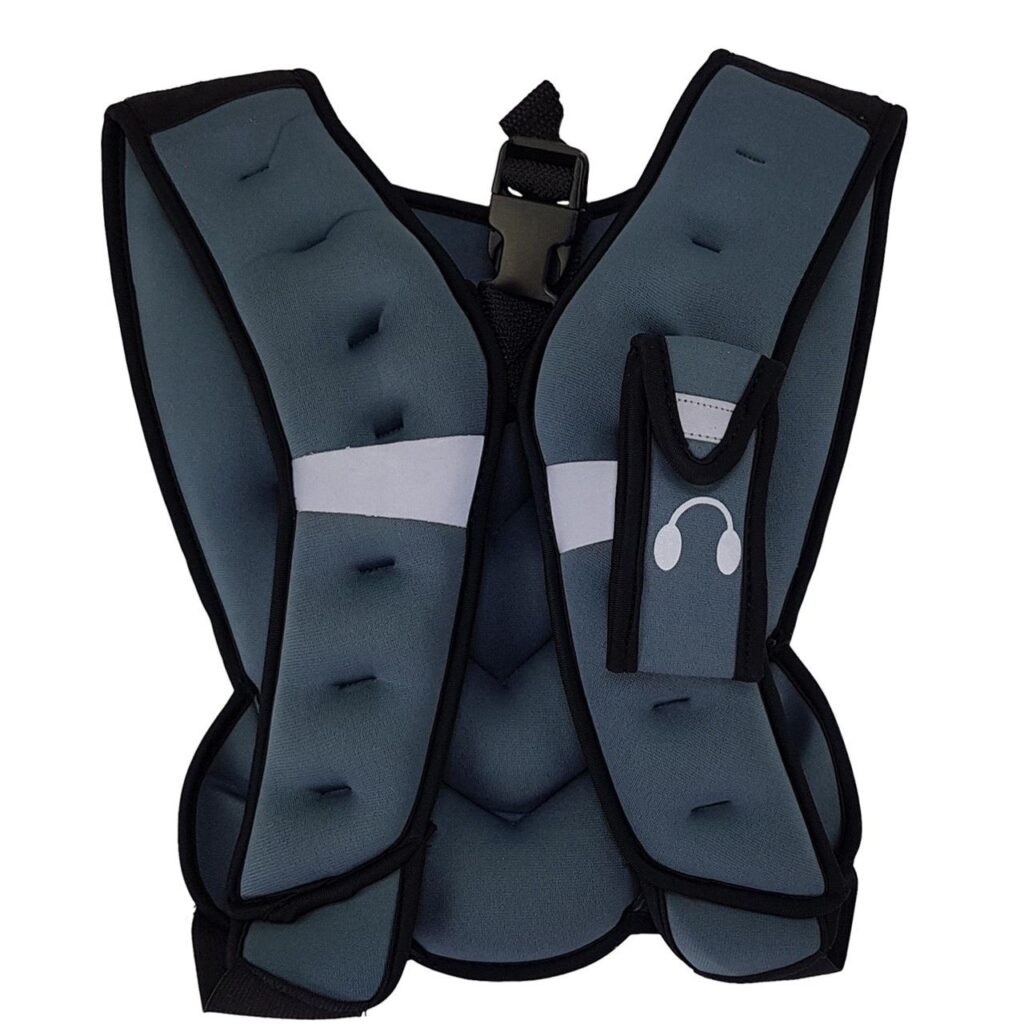
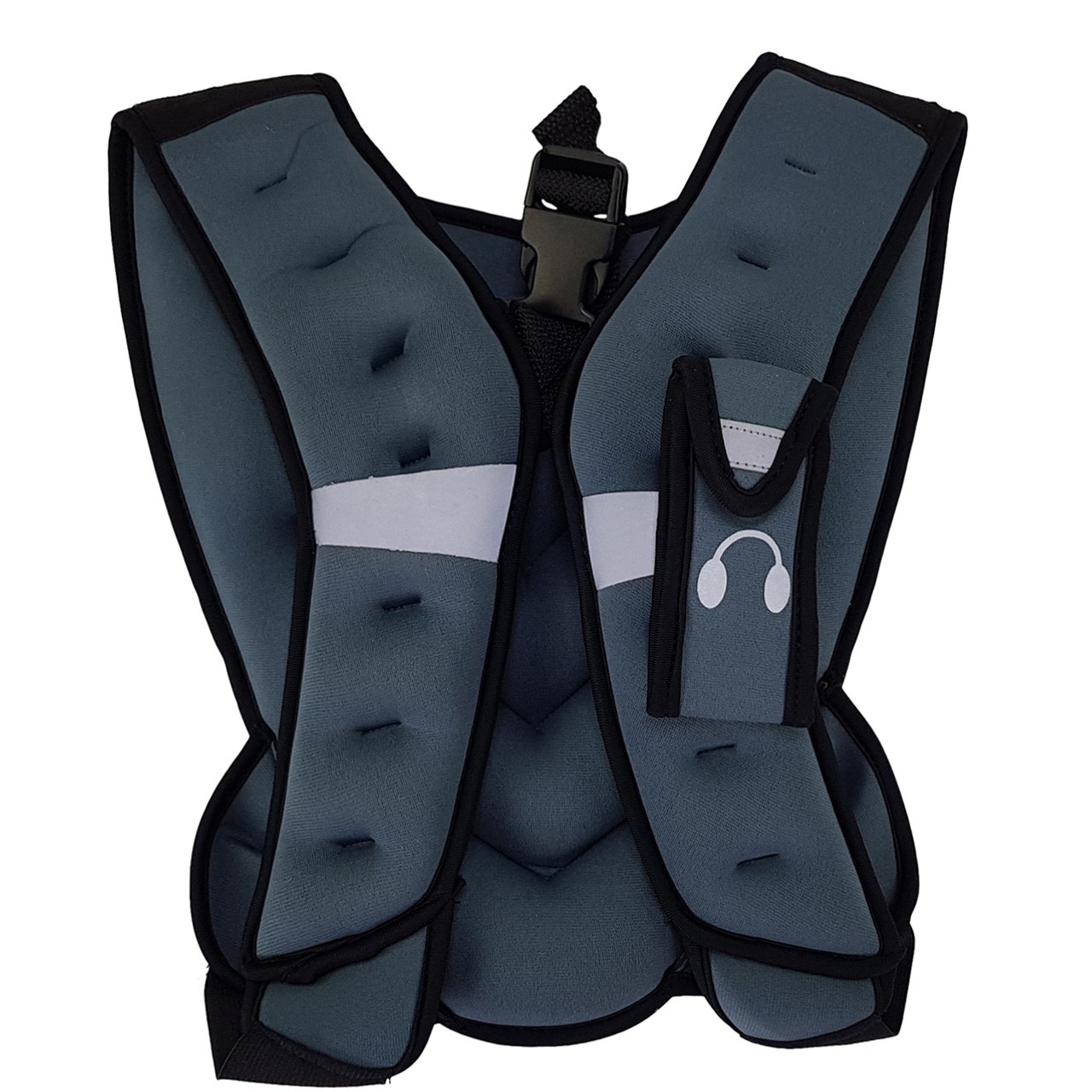
An additional challenge can be achieved with additional weights, such as a weighted vest. It increases the load on the entire body and brings the exercise even closer to real-world carrying tasks.
Alternatives to the Farmers Walk
The classic kettlebell walk is just one of many carry variations. Other carrying exercises shift the focus to different areas of the body and challenge the core, shoulders, or legs in new ways. A smart selection within your training plan adds variety and helps address weaknesses effectively.
- Suitcase Carry: Only one hand carries the load, similar to carrying a heavy suitcase. The unilateral load forces the oblique muscles to work extremely hard to keep the torso upright. This is a highly effective way to identify and correct left-right strength imbalances.
- Trap Bar Carry (Hex Bar): In this variation, the athlete stands inside a hexagonal trap bar and carries the load using two side handles. The centred load keeps the torso more upright than traditional dumbbells, reduces stress on the spine, and allows significantly heavier weights. An excellent option for building strength without excessive strain on the back.
- Zercher Carry: The load, usually a barbell or sandbag, is carried in the crook of the elbows while the torso remains upright and heavily braced. This variation activates the upper back, biceps, and abdominal muscles more intensely than many other carry exercises. A padded sleeve or thick T‑shirt can help prevent discomfort in the elbows when starting out.
- Overhead Carry: One or two dumbbells are held overhead while walking a predetermined distance. This demanding variation improves shoulder stability, challenges the thoracic spine, and places high demands on mobility. A light starting weight is essential here – control beats heavy loading.
Common Mistakes and How to Avoid Them
Most problems are not caused by using too much weight but by poor posture.
- Drooping shoulders: Don’t allow the weight to pull you downward. Actively pull your shoulder blades back and down.
- Excessive arching or rounding of the back: Both place the load incorrectly on the spine. Keep your core engaged throughout the movement.
- Steps that are too long: Shorter, controlled steps stabilise the load and reduce the risk of tipping sideways.
- Poor grip: Hold the dumbbell centrally to maintain balance. Dry hands or chalk can help if your grip starts to fail prematurely.
- Holding your breath: Breathe steadily through your abdomen, even when tension levels are high.
By consistently applying these principles, you can prevent overuse injuries and get the most out of every training session.
Everything Under Control!
This movement is one of the toughest carry exercises in strength training. As a complex exercise for improving back and shoulder strength, it challenges the entire body. Simultaneously loading the upper and lower body develops tremendous full-body strength that translates directly into everyday life and athletic performance. For this full-body workout, all you need at home are two weights and a hallway; in the gym, a corridor between machines is enough.
Frequently Asked Questions About the Farmers Walk
How long should each Farmers Walk set last?
Typically, a set covers 20 to 40 metres or lasts 30 to 60 seconds. Longer distances develop cardiovascular fitness and grip endurance, while shorter distances with heavier loads focus on maximum strength.
Is the Farmers Walk bad for your back or knees?
When performed with proper technique, the exercise is considered very joint-friendly because it involves no sudden or jerky movements. Problems usually arise when excessive weight is combined with poor posture, just as with any other strength-training exercise.
How often should you do Farmers Walks?
One to two sessions per week are sufficient to achieve noticeable improvements in grip strength and core stability.
What is the difference between a Farmer’s Walk and a Farmer’s Carry?
In everyday training, the two terms are often used interchangeably. Strictly speaking, a “Farmer’s Walk” refers to the original Strongman discipline performed with specialised handles, whereas “Farmer’s Carry” is the broader term covering all loaded carrying variations, including those performed with dumbbells, kettlebells, or sandbags. In practice, both describe the same movement: controlled walking while carrying weights in both hands.