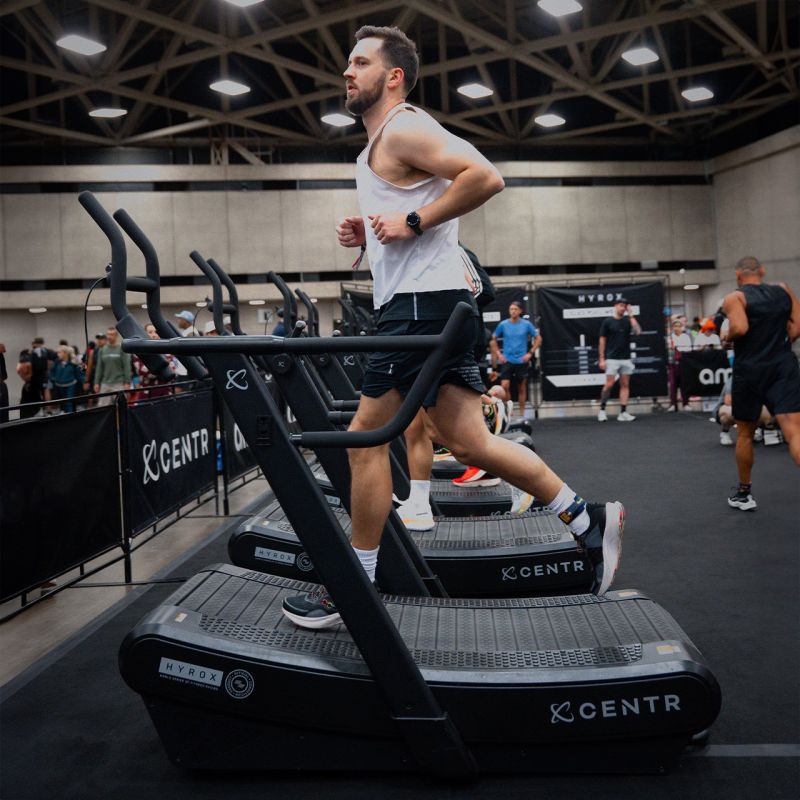
A treadmill without electricity is powered solely by your own muscle strength, with no motor and no power socket. These motorless, mechanical treadmills are considered the most intense and natural way to run indoors. In the treadmill range from isports you’ll find high-quality curved treadmills without electricity, available to order online or to test at the showroom in Lupfig.
What is a treadmill without electricity?
A treadmill without electricity, also called a motorless or mechanical treadmill, works without an electric motor and power connection. Instead of a motor, your own running movement drives the belt, and you set the pace yourself. Most of these devices are curved treadmills with a curved running surface. “Treadmill without motor”, “mechanical treadmill”, “self-powered treadmill” and “curved treadmill” therefore all refer to the same principle.
How does a motorless treadmill work?
You set the belt in motion with your own stride: the faster you run, the faster the belt moves. As soon as you slow down or stop, it stops too. There is no fixed machine speed, so you have full control and react in real time, ideal for sprints and intervals.
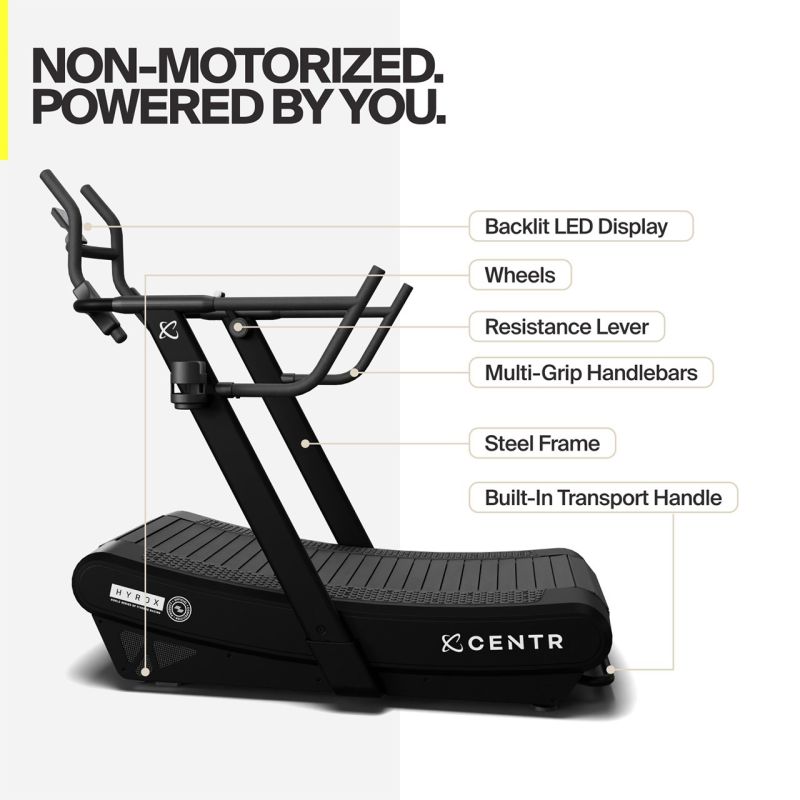
Magnetic Resistance: Control Intensity Precisely
Many modern curved treadmills offer switchable magnetic resistance levels. These let you simulate inclines or increase the effort required without changing your pace. This is ideal for strength endurance, sled-like push sessions and targeted interval training. Without resistance, the machine stays fast and responsive for sprint work.
Curved Treadmill or Motorized Treadmill: The Comparison
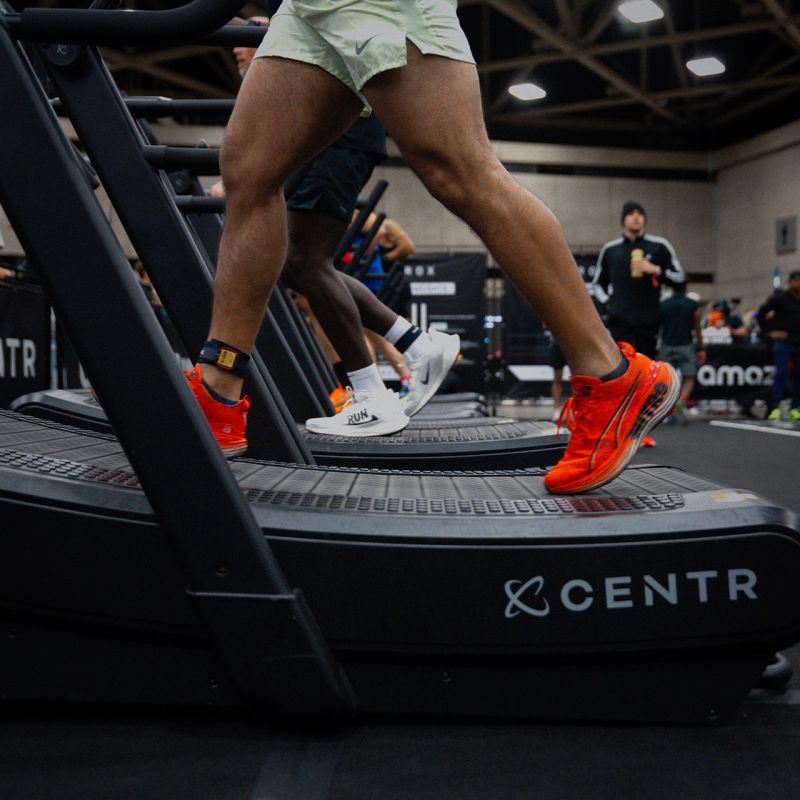
Both types have their place, but they serve different training goals. A motorized treadmill sets a constant speed and is suited to steady continuous running, rehabilitation and relaxed walking. A non-motorized curved treadmill requires active propulsion and rewards you with higher intensity, greater muscle activation and full pace control in real time.
| Criterion | Curved (non-motorized) | Motorized |
| Drive | Your own muscle power | Electric motor |
| Muscle activation | Higher (incl. posterior chain) | Lower |
| Calorie burn | Up to around 30% higher | Lower |
| Pace control | Stepless, in real time | Via buttons/programs |
| Power connection | Not required | Required |
| Maintenance/wear | Low, no motor | Motor wears out |
| Ideal for | Sprints, intervals, Hyrox, athletics | Continuous running, walking, rehab |
The differences show up above all in the drive and in the effect on the body. While the motorized machine is powered by an electric motor and needs a power connection, you set the curved treadmill in motion with your muscle power alone, completely without a socket. As a result, you activate considerably more muscles, including the posterior chain, and burn noticeably more calories at a comparable pace, as scientific studies on the higher cardiovascular demands of non-motorized treadmills show. Pace control also differs fundamentally: on the motorized model you set the speed via buttons or programs, whereas on the curved treadmill you regulate it steplessly and in real time through your stride.
Another advantage of the non-motorized principle lies in its durability. Without a motor there is no central wear part, which lowers maintenance effort and follow-up costs. The motorized treadmill, by contrast, excels at calm continuous runs and in the rehabilitation setting.
Conclusion: For intense, performance-oriented training, the curved treadmill is superior. Anyone looking mainly for calm continuous runs or a gentle rehabilitation program is often better served by a motorized model.
Curved treadmill: the curved running surface
The curved running surface guides the foot strike toward the mid- and forefoot, encouraging an upright, natural running posture, as studies show. This can reduce impact load and trains clean running technique. Important: the switch feels unfamiliar and demanding at first, since you actively drive the belt. Start with short sessions and increase gradually.
Joint Protection and Natural Running Technique
The curved running surface guides the foot strike toward the mid- and forefoot, encouraging an upright, natural running posture. This can reduce impact load and trains clean running technique. Important: the switch feels unfamiliar and demanding at first, since you actively drive the belt. Start with short sessions and increase gradually.
Who is a mechanical treadmill suitable for?
Mechanical treadmills are aimed above all at ambitious athletes, functional athletes and Hyrox participants who train sprints, intervals and competition sessions. Thanks to stepless pace control, slower curved models are also suitable for controlled, joint-friendly walking training at home.
What to look for when buying a motorless treadmill?
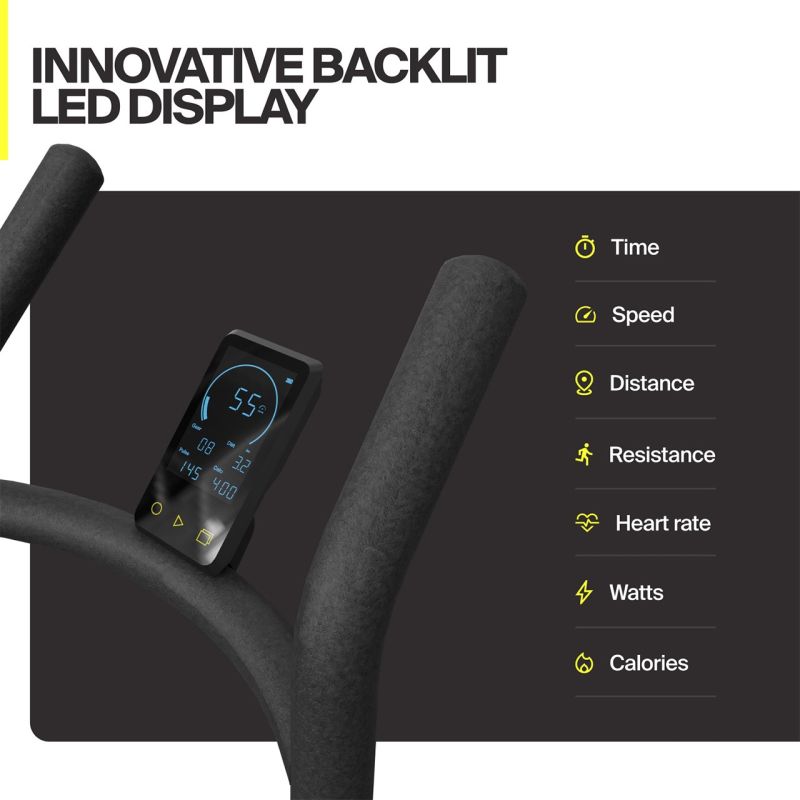
Look for a stable, high-quality build, a shock-absorbing running surface, a sufficiently large running area and a high maximum user weight. Magnetic resistance levels increase training intensity, and a display with Bluetooth enables performance tracking.
Buying a treadmill without electricity at isports
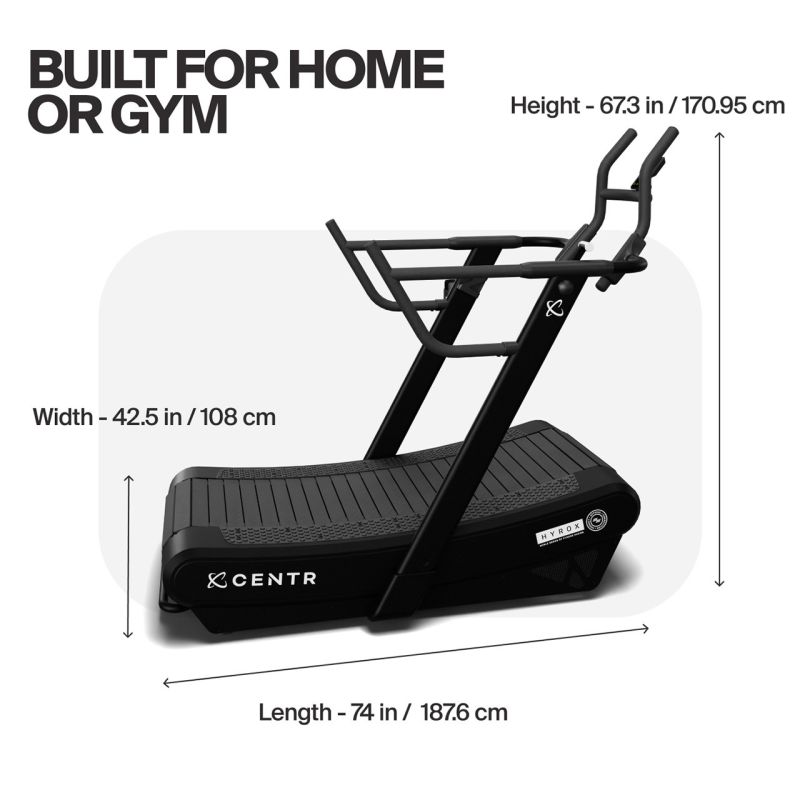
As a Swiss specialist retailer, we advise you personally and show you the differences between motorless and motorised models. Our highlight is the Hyrox Perform Tread treadmill, a motorless curved treadmill at competition level. Test it at the showroom in Lupfig or order online, available immediately.
Frequently asked questions about motorless treadmills
Does a Curved Treadmill Burn More Calories?
Yes. Because you drive the belt yourself and engage more muscles, energy expenditure is noticeably higher than on a motorized treadmill at a comparable pace. This is exactly what makes non-motorized treadmills so effective for fat-metabolism, conditioning and competition training
Which Brands of Non-Motorized Treadmills Are There?
The market for curved treadmills is shaped by specialized functional and performance brands. Internationally known names include manufacturers from the field of athletic and competition training, whose machines are found in cross-training settings, Hyrox stations and performance centers. More important than the brand name alone, however, are build quality, running surface size and maximum user weight. isports carries selected, high-quality models and advises you in a brand-neutral way on which machine suits your training goal. Our highlight is the Hyrox Perform Tread, a non-motorized curved treadmill at competition level.
What is a treadmill without electricity?
A motorless, mechanical treadmill that is powered by your own running movement.
Is a treadmill without a motor better?
For intensive interval and competition training, yes, as it works more muscles and you control the pace yourself. Get professional advice at our showroom.
Does a curved treadmill need electricity?
No, at most batteries for the display.