
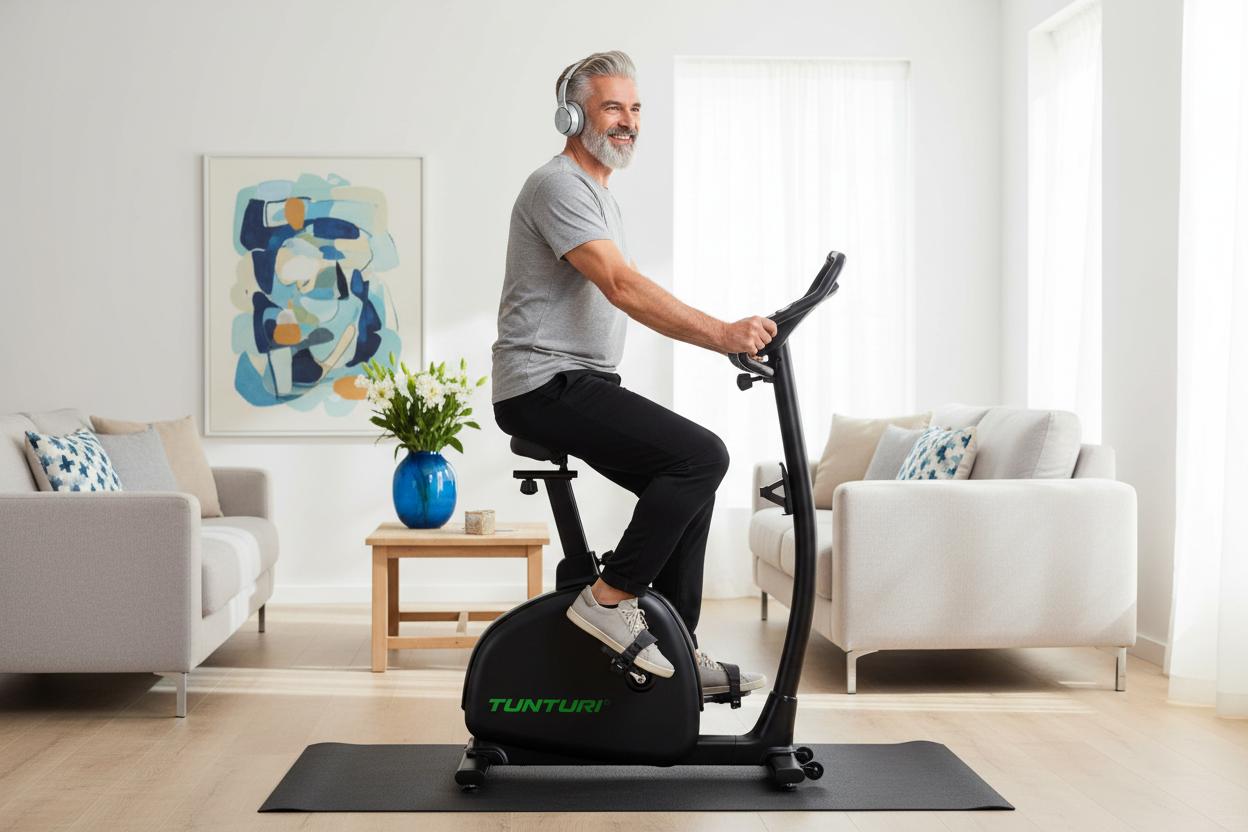
People who regularly pedal in older age protect their heart, strengthen their leg muscles, and keep their joints flexible. An exercise bike for seniors is considered an ideal piece of fitness equipment for endurance training: it is low-impact, can be individually adjusted, and works just as well in bad weather as it does for those with limited mobility. In our guide, you will learn what to look for when buying a pedal trainer and how to get started with training easilyt.
Exercise bike vs. ergometer – what’s the difference?
Aren’t exercise bikes and ergometers the same? Almost. A classic exercise bike offers adjustable resistance levels and displays basic metrics such as speed, calories burned, and workout time. These devices are beginner-friendly and often more compact—some models are even foldable, which can be especially practical if you have limited space at home.
What are the benefits of training with a pedal trainer?
© Geber86 – stock.adobe.com
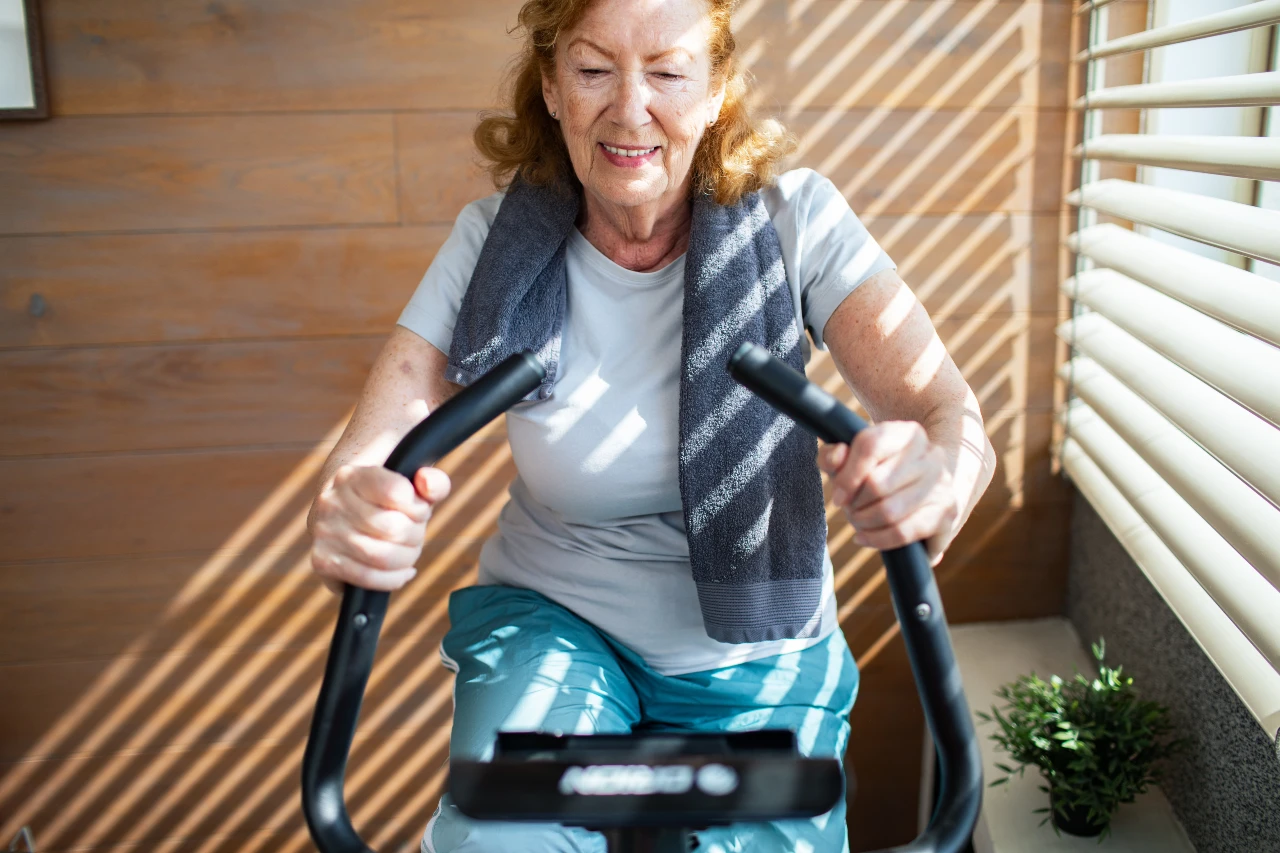
The smooth circular motion on an exercise bike puts very little strain on the knees and hips, making it one of the most joint-friendly and effective forms of cardio training for seniors, as most of the body weight is supported by the saddle. This makes this type of exercise especially valuable for people with osteoarthritis or age-related musculoskeletal issues.
Additional benefits of training with a pedal trainer:
- The intensity of the workout can be adjusted at any time to suit your personal fitness level—from gentle pedaling to performance-oriented cycling with specific goals.
- The cardiovascular system is gradually strengthened when cycling on an exercise bike, without overstraining the body.
- Regular training on this cardio equipment also builds leg and glute muscles—and strong leg muscles are one of the most important protective factors against falls in older age.
- It improves balance, coordination, and overall stability in everyday life, for example when climbing stairs or walking on uneven ground.
- Regular physical activity has a positive effect on mental health.
- A pedal trainer or cycle ergometer does not take up much space.
- You can watch TV, listen to music, or place a tablet on the device and stream your favorite series while exercising.
What to consider when buying an exercise bike for seniors
Not every exercise bike is automatically suitable for older adults. To ensure that your new bike provides long-term enjoyment and can be used safely, it’s worth paying attention to the following factors when making your purchase:
|
 |


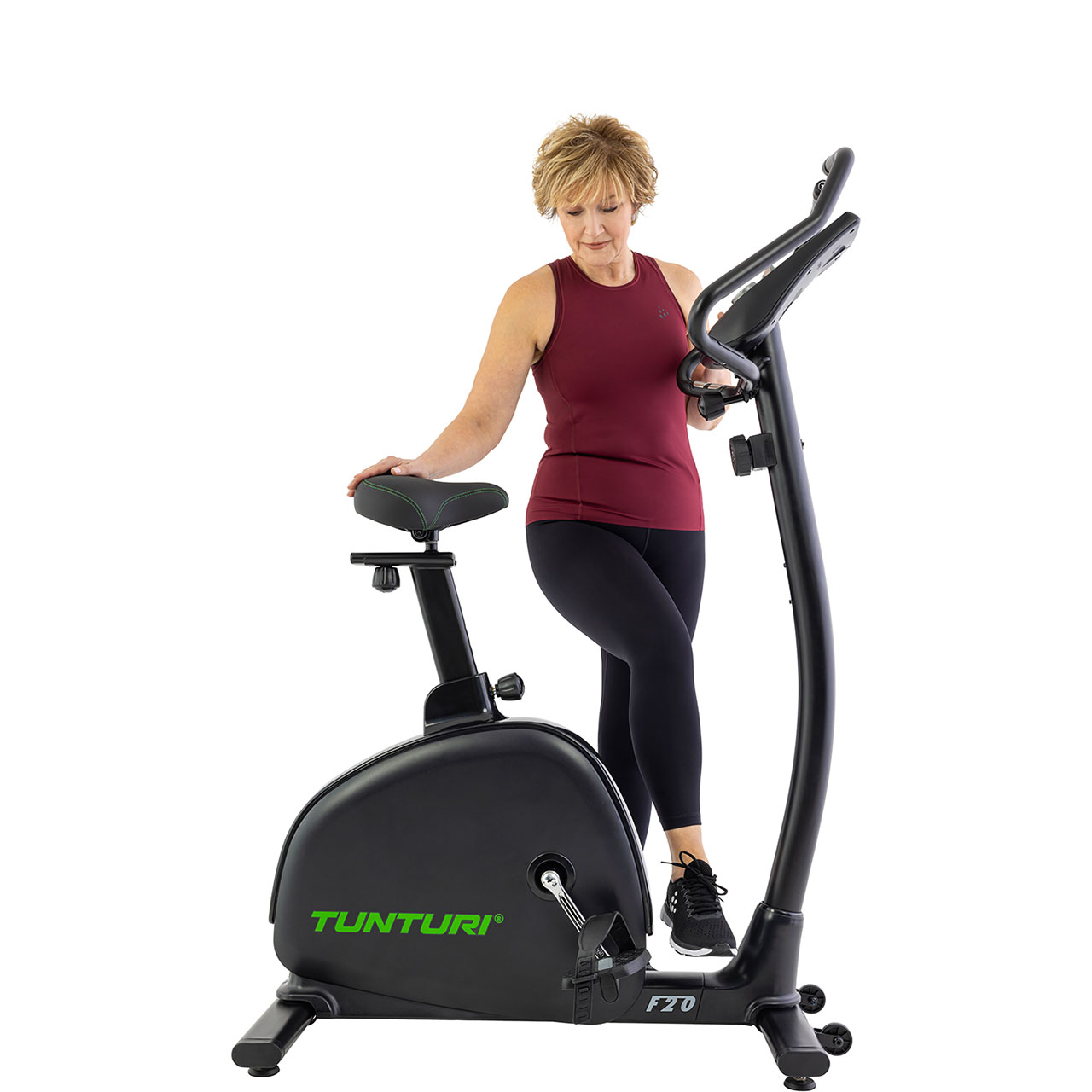
- Low step-through design: A pedal trainer with a low frame allows seniors to get on and off safely—even with limited mobility or hip problems.
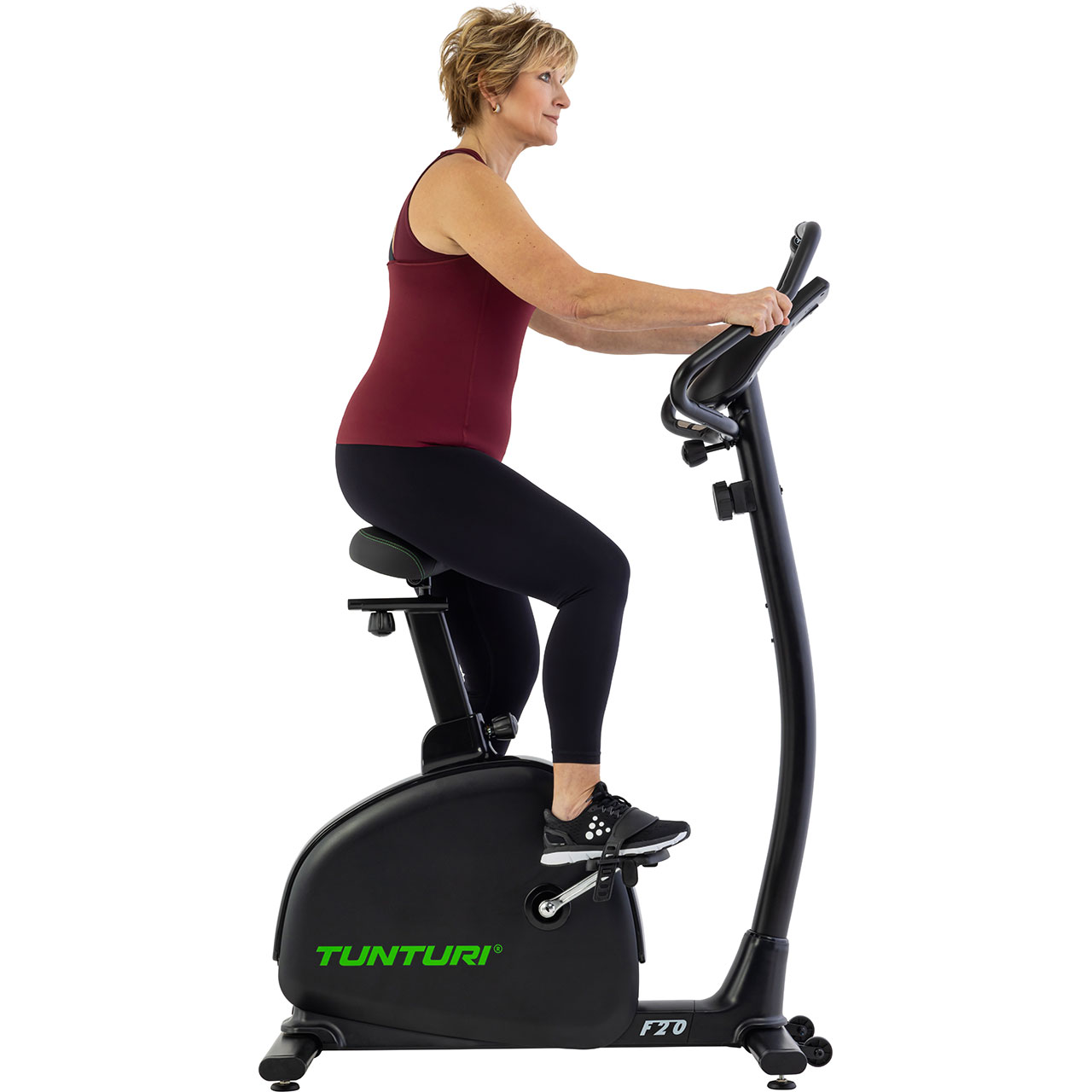
- Ergonomic saddle and multiple grip positions: A soft, wide comfort saddle prevents pressure points. Handlebars with different grip options reduce strain on the shoulders and wrists.
- Non-slip pedals: Pedals with a good, non-slip surface provide extra safety when getting on, especially if mobility or balance is limited.
- Frame stability: A heavier exercise bike is more stable and offers better support when mounting and dismounting.
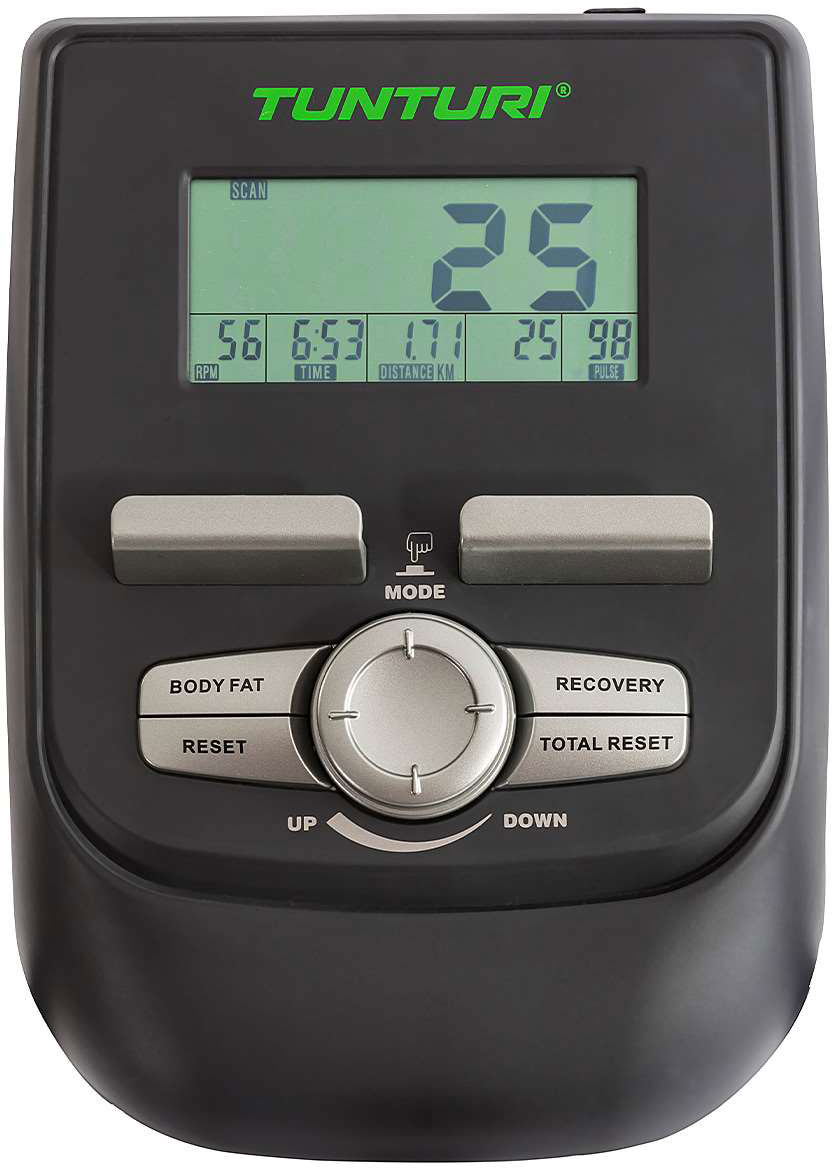
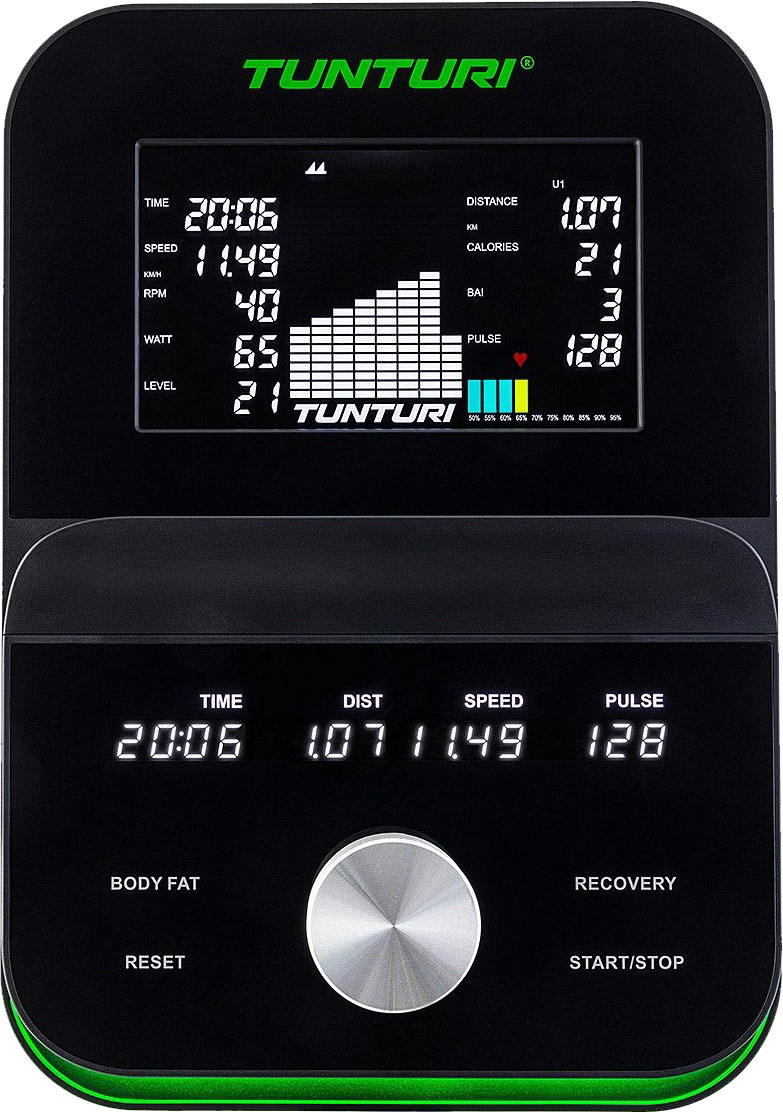
- Ease of use: Large displays and high-contrast buttons are especially convenient for older adults.
- Bluetooth (see technical specifications of the respective device)
|
 |
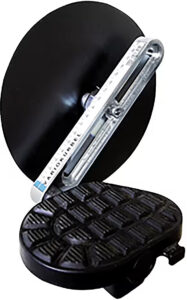
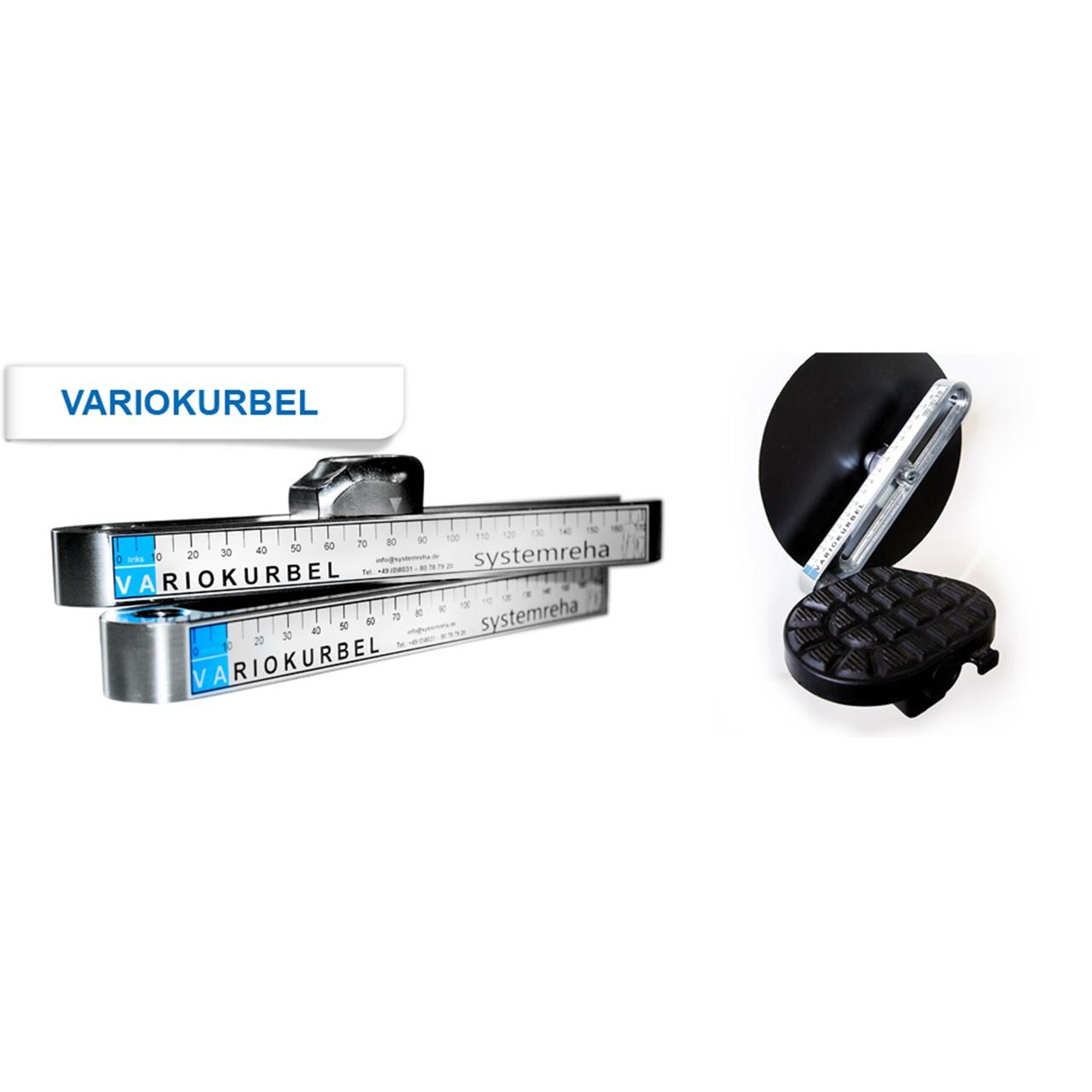
- Optional adjustable crank (variocrank): With adjustable crank arms—also known as variocranks or rehab cranks—the distance to the axle can be varied. This allows the angle between the thigh and lower leg to be adjusted, which is especially helpful after surgery or in the case of physical limitations. This feature is available on exercise bikes and ergometers from brands like Tunturi, adidas, and Reebok.
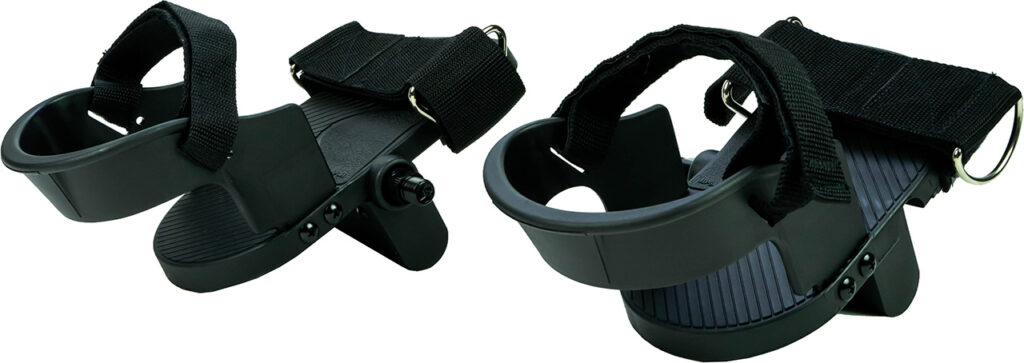
- Optional reha pedals: These reha pedals come with additional integrated straps that help support the heel. Tunturi rehab pedals provide maximum protection against slipping.
Our top picks: The 3 best exercise bikes for seniors
Pedal trainers for beginners
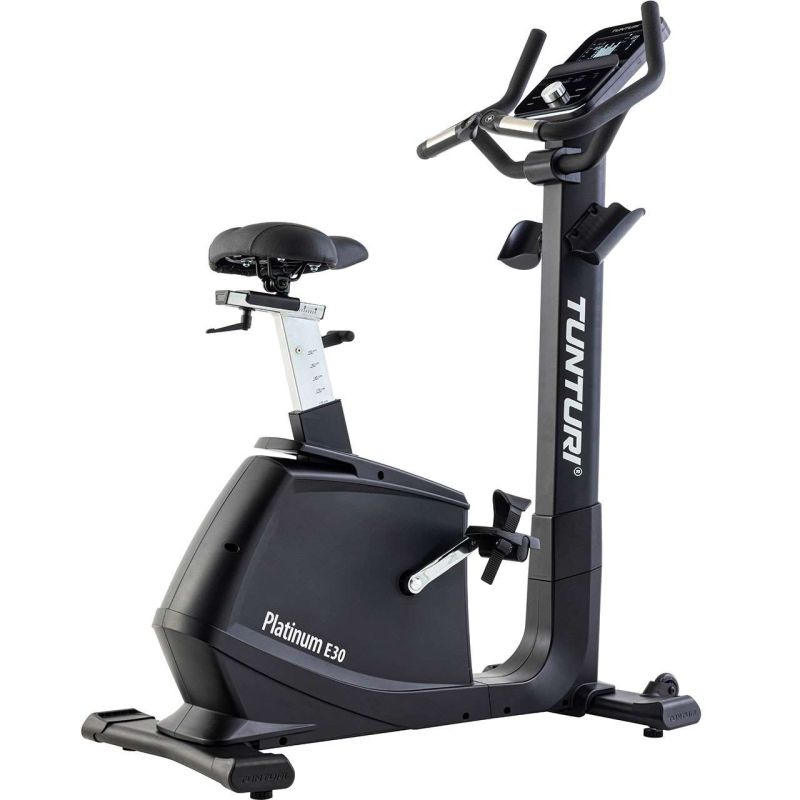
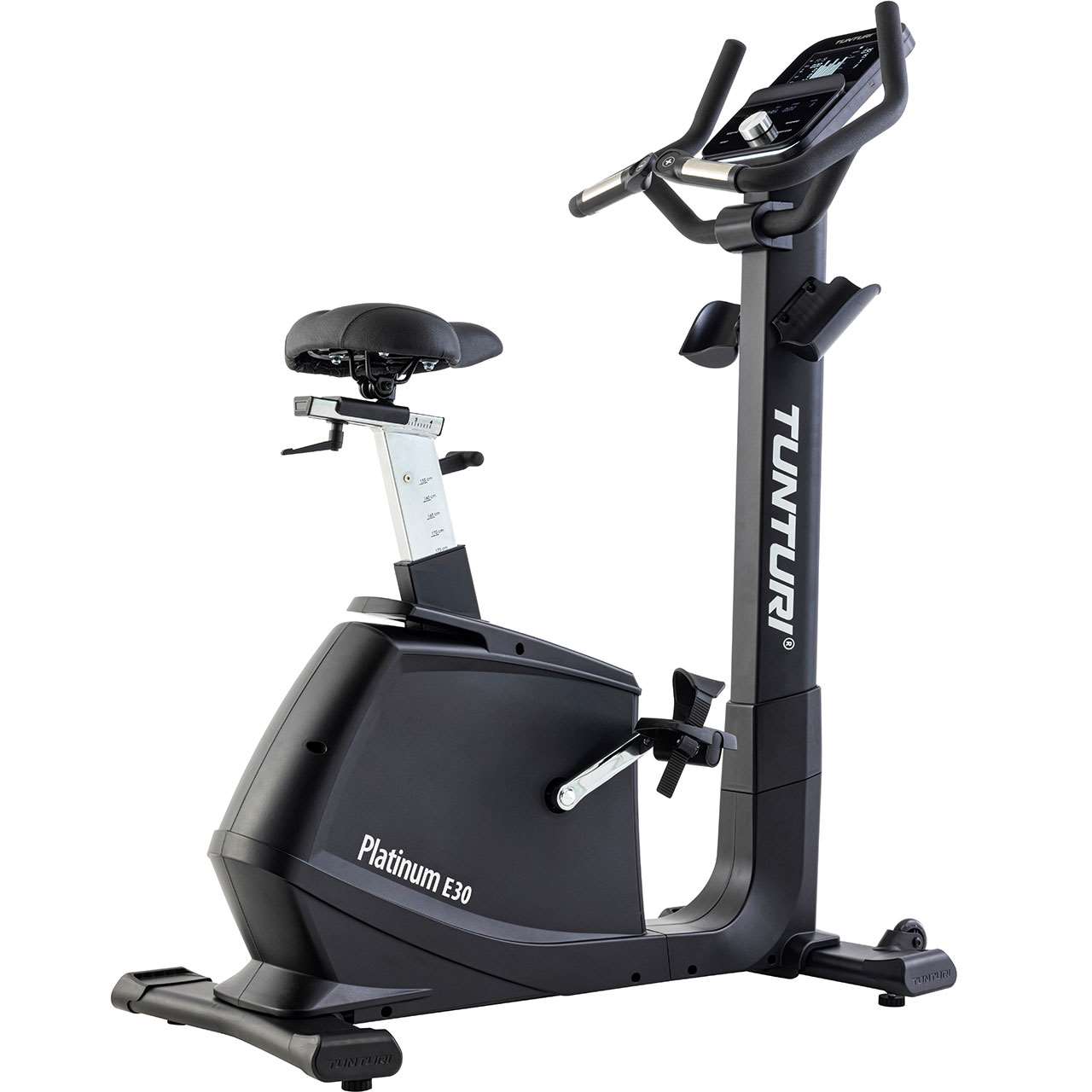
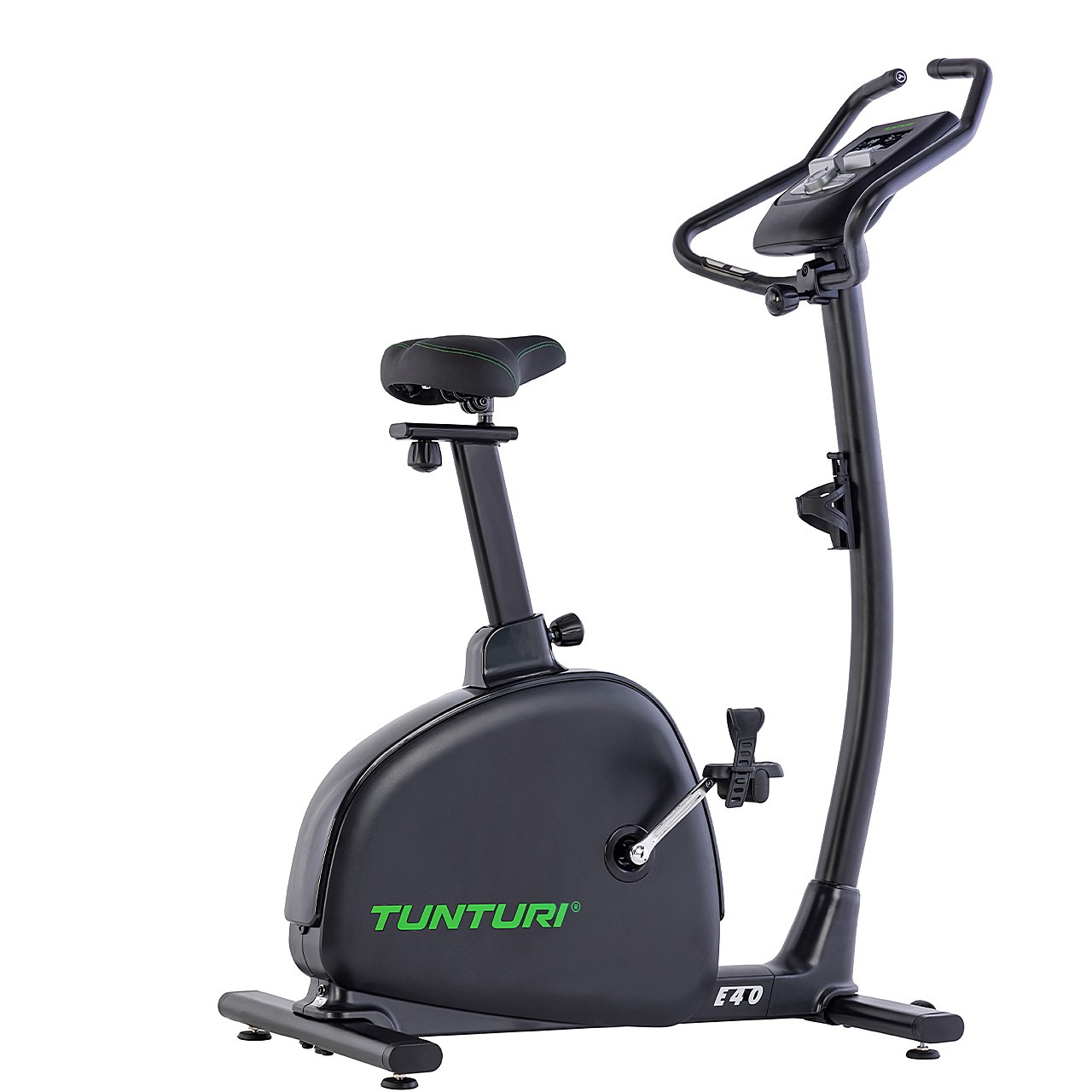
The Tunturi Platinum E30 Upright Bike is an upright-style exercise bike designed for senior fitness. The non-slip pedals are positioned close to the body’s center, which reduces strain on the knee joints. An adjustable comfort saddle and a low step-through design ensure a safe and stable training position. With 48 resistance levels and a maximum resistance of up to 400 watts, it offers plenty of flexibility. The backlit 7‑inch LCD is easy to read, and apps like Zwift and Kinomap are supported. A tablet holder, bottle holder, and transport wheels are included. Maximum user weight: 180 kg.
Ergometer with comfort and precision
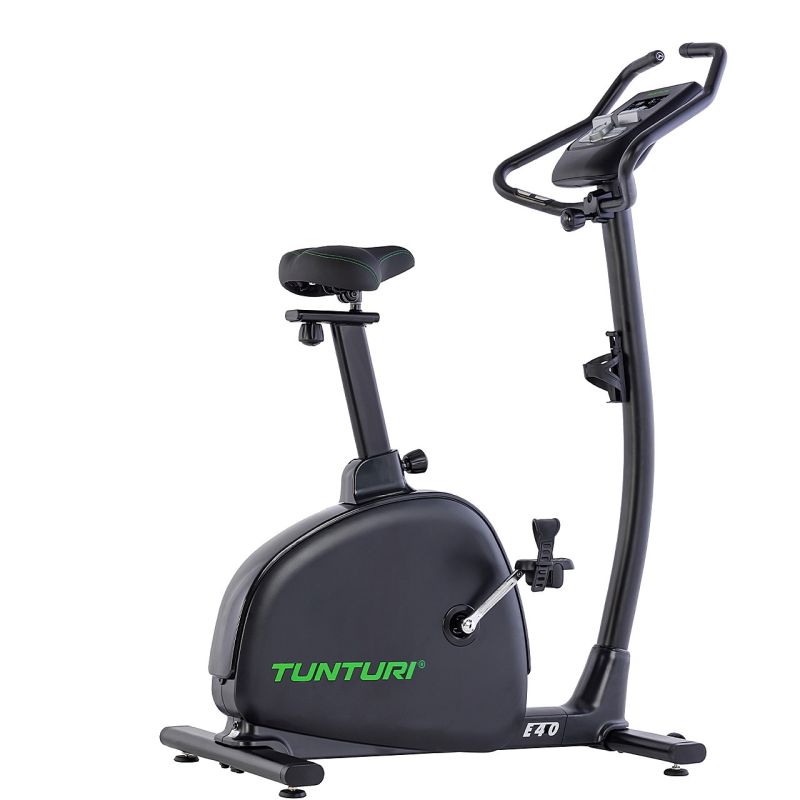
As an exercise bike for seniors, the Tunturi Signature Ergometer stands out with its multi-grip handlebars featuring integrated heart rate sensors, allowing for various hand positions—significantly reducing strain on the shoulders and wrists during longer sessions. The low step-through design and Comfort Balance pedals with weights for easier mounting make the device suitable for everyday use, even with limited mobility. With 32 resistance levels, a maximum resistance of up to 440 watts, 26 training programs, and app connectivity via Zwift, Kinomap, and Tunturi Routes, it offers long-term variety. Maximum user weight: 150 kg.
Recumbent bike – gentle on the back and joints
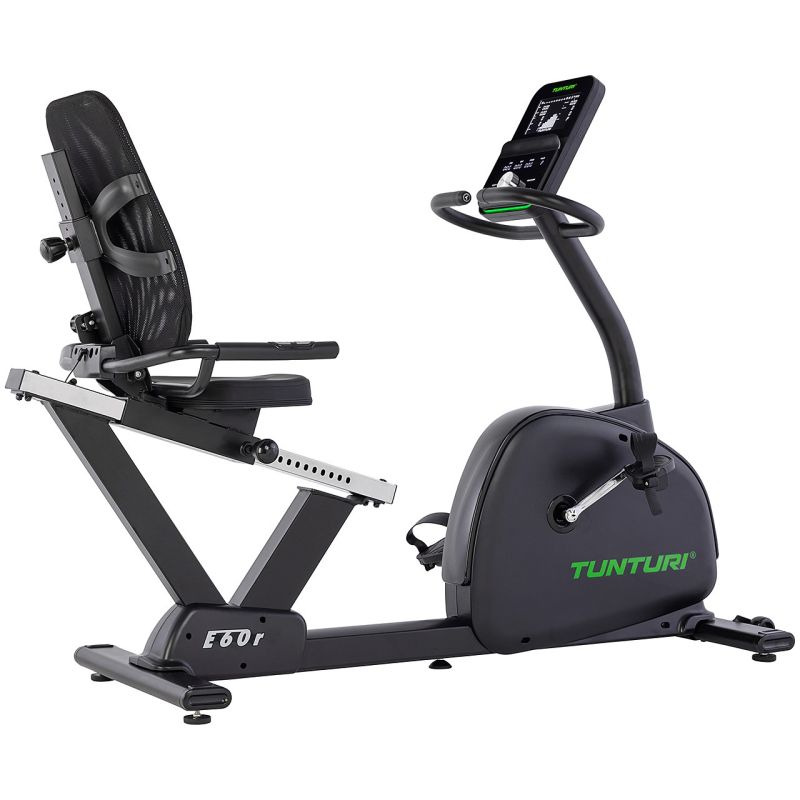
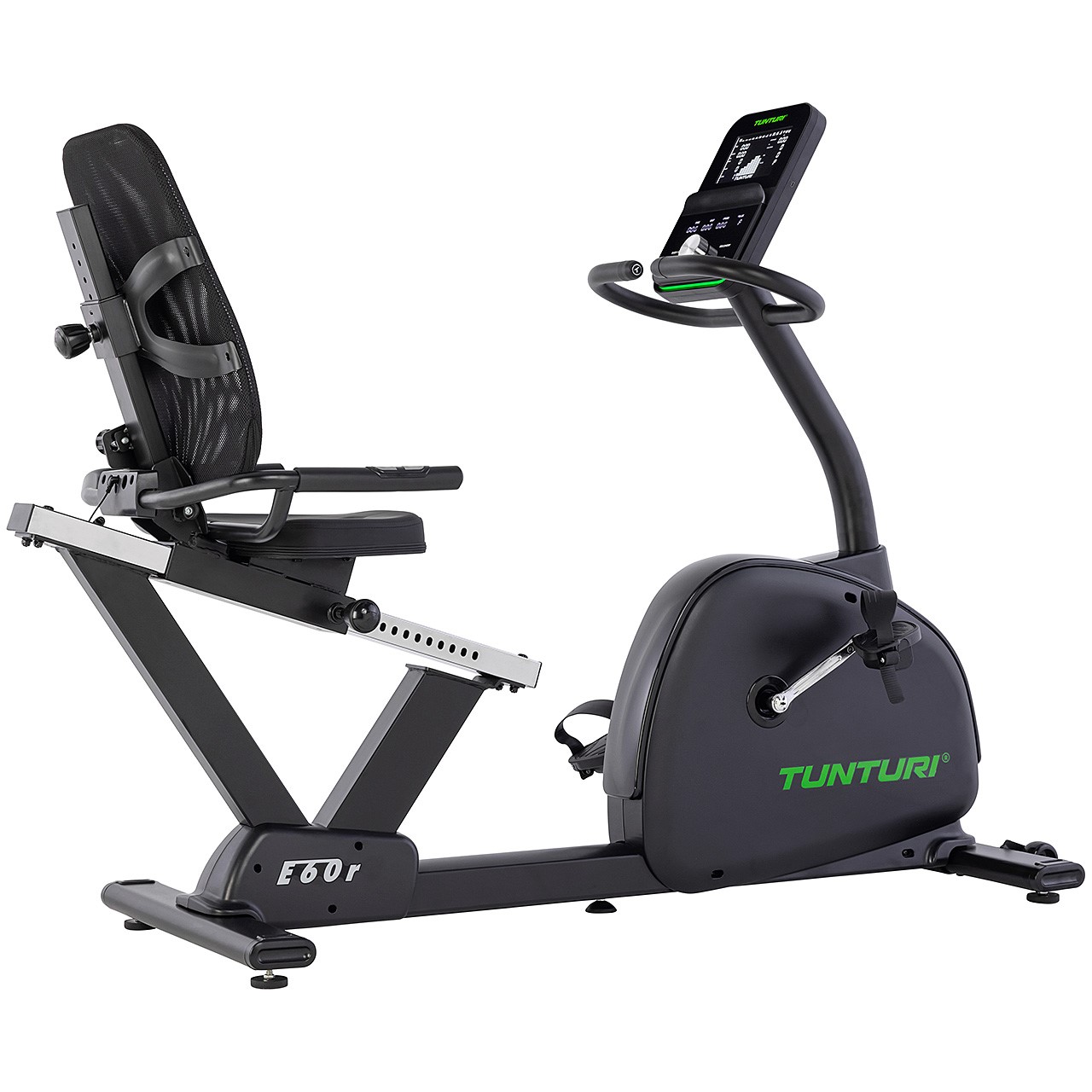
For older adults with back problems or limited mobility, the recumbent bike from Tunturi is the most consistent solution. The generously padded seat with a breathable mesh backrest, the wide low step-through design, and the ergonomic, slightly reclined seating position fully relieve pressure on the back and knees—while still effectively training the leg muscles. The watt-based resistance control allows for precise training intensity, making it ideal following medical advice or during rehabilitation. Zwift and Tunturi Routes are supported, and handles with integrated heart rate sensors provide additional stability when getting on and off.
If you also want to involve your arms in your cycling workout, a full-body ergometer is the right choice—an exercise bike for both arms and legs, where the upper and lower body are active at the same time.
Would you like expert advice before purchasing a pedal trainer or test the equipment in person? Visit us at the isports Showroom, conveniently located near Zurich, Basel, Lucerne, and Zug. Many products from Tunturi are on display and available for testing. Our expert staff will take the time to personally show and explain the exercise bikes and ergometers to you.
Training on an exercise bike – how to do it easily and safely
If you’re returning to exercise after a long break or starting structured training for the first time, it’s important to begin gradually. Ten to fifteen minutes per day is a realistic starting point and often more effective than occasional long sessions. Adjust the resistance so that you can still talk comfortably during the workout—this is the simplest rule of thumb for a suitable intensity.
Three sessions of thirty minutes per week on a pedal trainer are more beneficial than one hour once a week—consistency beats intensity. Start with five minutes of easy pedaling before increasing the effort: muscles and joints need this warm-up period, even on a stationary bike.
Enjoy your ride! The right accessories for pedal trainers and ergometers
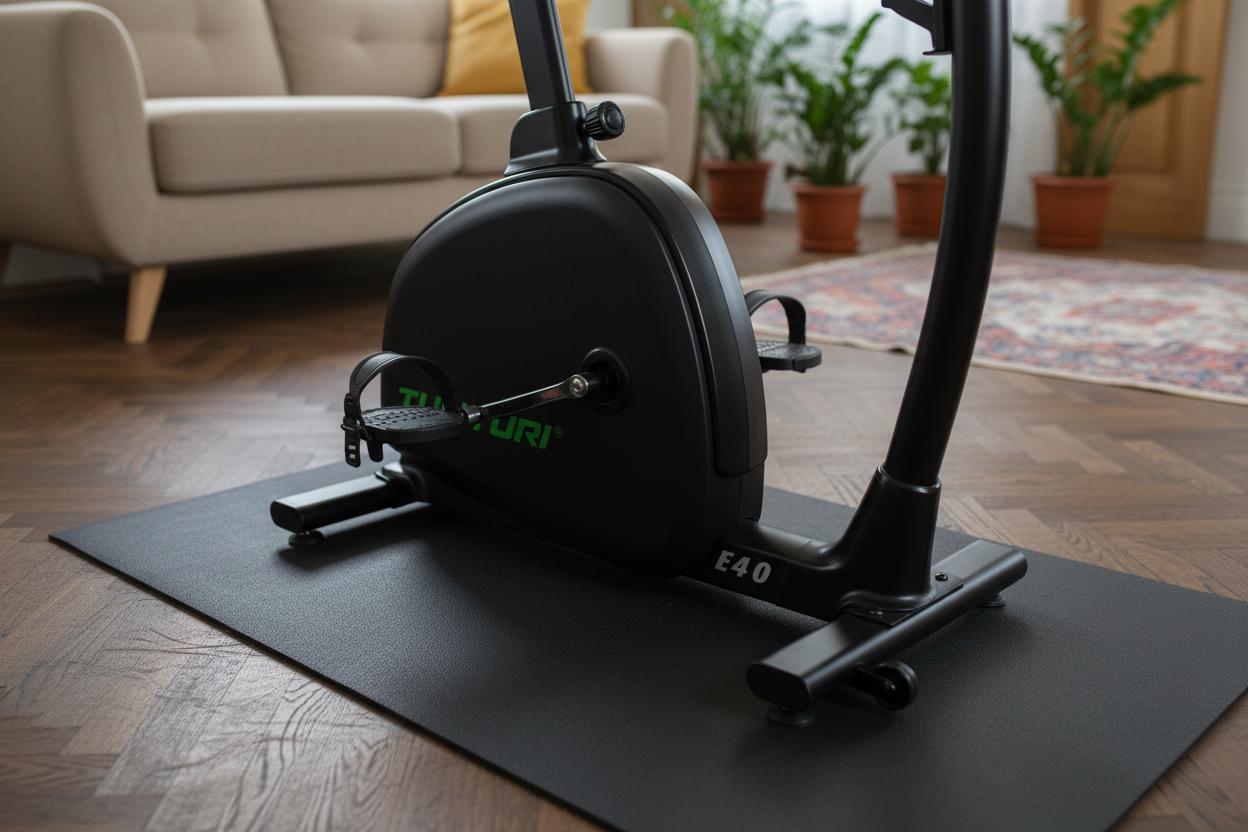
A non-slip floor mat under your exercise bike protects your flooring, absorbs vibrations, and prevents the equipment from moving—especially important for safe mounting and dismounting.
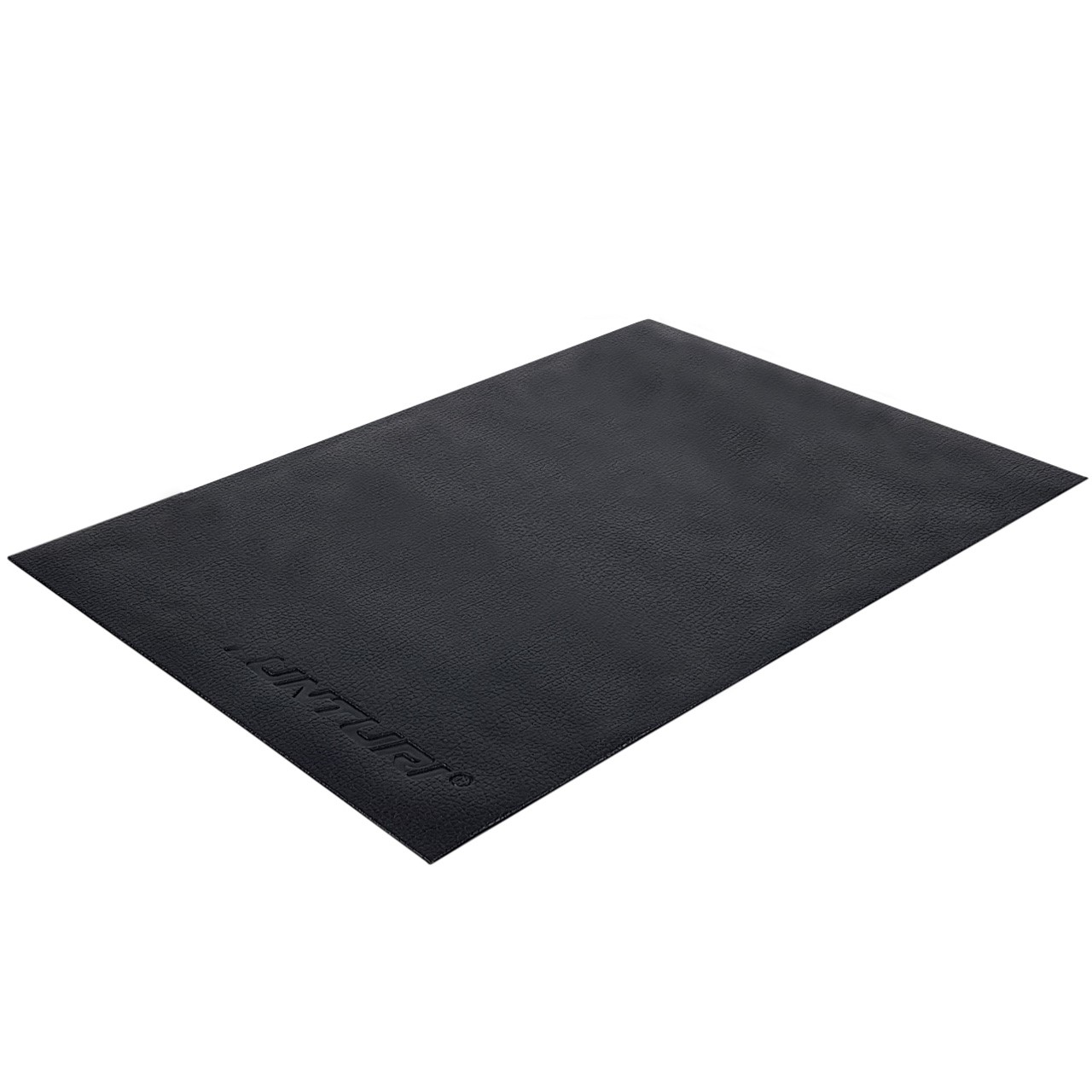
If you want to structure your training based on heart rate zones or follow medical recommendations, a chest strap heart rate monitor is a great choice—it provides more accurate data than the grip sensors on the handlebars. For those training after surgery or with limited foot mobility, it’s also worth considering specialized rehab pedals. They ensure a secure, guided foot position, even when full strength has not yet been regained.
Browse our range of endurance accessories and explore the isports Online Shop for equipment to support your cardio training—from chest strap heart rate monitors to rehab pedals.
Staying active in old age with endurance and strength
Regular endurance training on an exercise bike is a key and valuable part of a balanced fitness routine for seniors. It becomes even more effective when combined with strength and mobility training. Muscle mass declines significantly faster with age than in younger years. Light strength training—for example with dumbbells—can help counteract this process.
Mobility training is just as important: targeted exercises for the back, balance, and stability on a fitness mat, using tools such as resistance bands, are gentle on the joints while strengthening the small stabilizing muscles around the ankles, knees, and hips—precisely the structures that help prevent falls in everyday life and support an upright posture.
A short strength or mobility session in your home gym can easily be added to your existing training days on the pedal trainer or done as a separate session in between. Stay fit as you age!